
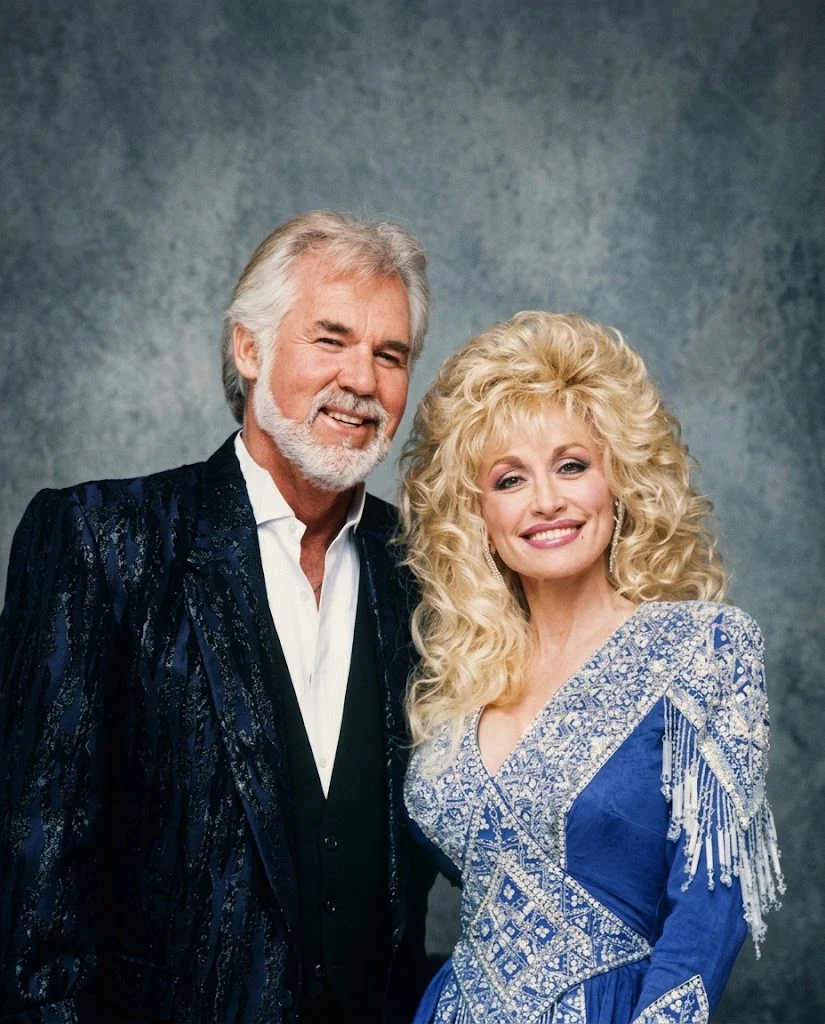
There was a moment when Kenny Rogers stood at the edge of a safe career and chose the unknown. He had already lived several musical lives. He played upright bass in a jazz trio, performed folk music, and embraced psychedelic pop. By the mid 1970s he had a comfortable place as frontman of The First Edition, with steady television work and secure income. Yet he sensed his voice was meant for a different kind of storytelling.
In 1976 the group disbanded and Rogers made the risky decision to step into the spotlight alone. Music Row was skeptical of a singer approaching forty trying to reinvent himself. That skepticism vanished in 1977 when he released Lucille. The sweeping country waltz about a fractured family, a barroom encounter, and a heartbroken farmer struck a profound nerve.
The track earned him a Grammy Award and proved that his gravelly, lived-in voice did not need a band behind it to carry its heavy emotional weight. The following year The Gambler gave him an unshakable cultural persona. It offered millions a simple philosophy about holding on and letting go, turning Rogers into the silver haired sage of country radio.
As his star rose Rogers pushed the genre’s limits, and he met immediate friction. Nashville was fiercely protective of its traditional sound in the late 1970s, and purists actively resisted artists who blended country with mainstream pop. Rogers navigated that resistance not by arguing with executives but by trusting his own ear. He believed a genuinely great song could not be contained by an arbitrary label.
In 1980 he reached across the rigid industry divide and asked rhythm and blues star Lionel Richie to write and produce a track for him. Bringing an outside pop producer into the country world was viewed as a major risk, but Rogers insisted. The collaboration produced Lady, a massive crossover hit that dominated both the country and pop charts at the same time.
He ignored the industry’s borders again in 1983, recording the Bee Gees penned Islands in the Stream with Dolly Parton. Instead of a competitive vocal battle, the track became a masterclass in mutual respect and set a duet standard that remains unmatched.
Behind the staggering record sales and genre defying studio tracks was a man who intimately understood the quiet struggles of ordinary people. Rogers grew up in a federal housing project in Houston, Texas, and he never lost his connection to the working class. Whether he sang about fading chances, quiet regrets, or lifelong love, his signature warmth turned tragedy into comfort. His records grew increasingly polished, but the emotions inside them stayed raw and grounded.
He did not just sing a lyric. He sat down beside the listener to tell them a story.
To the music industry he was a global icon who permanently expanded the borders of what a country artist could achieve. To millions of listeners the scale of his commercial success never mattered as much as the feeling in his voice. Whenever a Kenny Rogers song came out of a dashboard radio, it felt like a wise friend pulling up a chair at the kitchen table.
The man who took a gamble on his own talent ended up winning the world. He did not change country music by fighting its traditions. He simply opened the door wide enough for everyone else to walk through.