
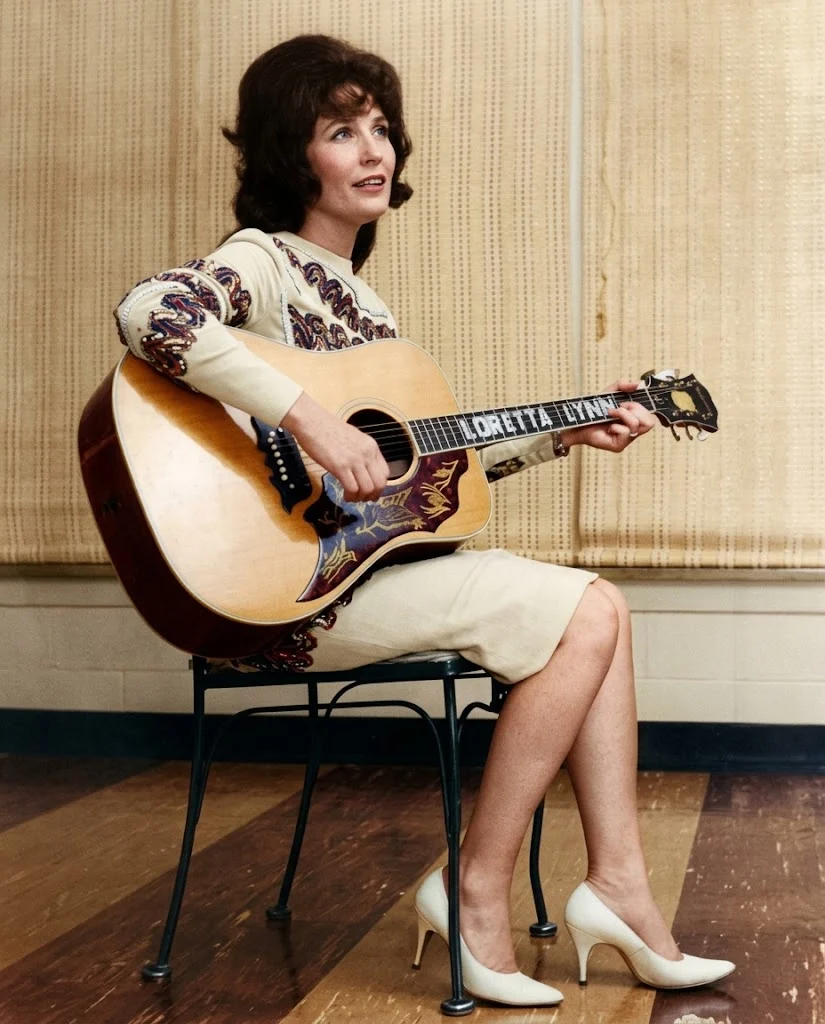
When Loretta Lynn walked into a Nashville studio in 1968, she carried more than just a steel guitar and a twang. She carried a warning — one that would echo through country music history and change what it meant to be a woman in the genre.
Her marriage to Oliver “Doolittle” Lynn was a complicated survival story. Married at just fifteen, her entire adult life was anchored to him. Their bond was built on deep, enduring love, but it was constantly tested by his drinking and his wandering eye. When Loretta discovered another woman was actively pursuing her husband, she didn’t retreat into silence or hide in her dressing room. Instead, she faced the threat head-on.
That raw, real-life confrontation could have easily remained a private moment of frustration. Instead, Loretta took the exact words she used to defend her marriage and carried them directly into a historic Nashville recording session with legendary producer Owen Bradley. She cut “Fist City,” laying down a vocal track that was equal parts promise and pure grit.
Bradley, who had shaped the polished “Nashville Sound,” recognized that the magic of this particular recording was in its unvarnished honesty. He let the driving steel guitar match her fierce Appalachian twang, turning a deeply personal threat into a battle cry for betrayed wives everywhere.
The track is fundamentally about a woman who refuses to play the victim, drawing a hard line in the sand to protect her family from an outside intruder. It captures the complex reality of holding onto a flawed marriage while fiercely defending what is rightfully yours.
As Loretta plainly declared to her rival in the chorus: “You better lay off of my man / If you don’t wanna go to Fist City.”
The record soared to number one on the country charts in early 1968. It was initially banned by several conservative radio stations whose programmers thought the message was too aggressive for a woman to sing, but listeners flooded the request lines anyway.
Loretta transformed her private humiliation into permanent public armor. In doing so, she gave millions of everyday women a voice they did not know they were allowed to use. She proved that a country song did not always have to be a white flag of surrender. Sometimes, it could be a drawn line.