
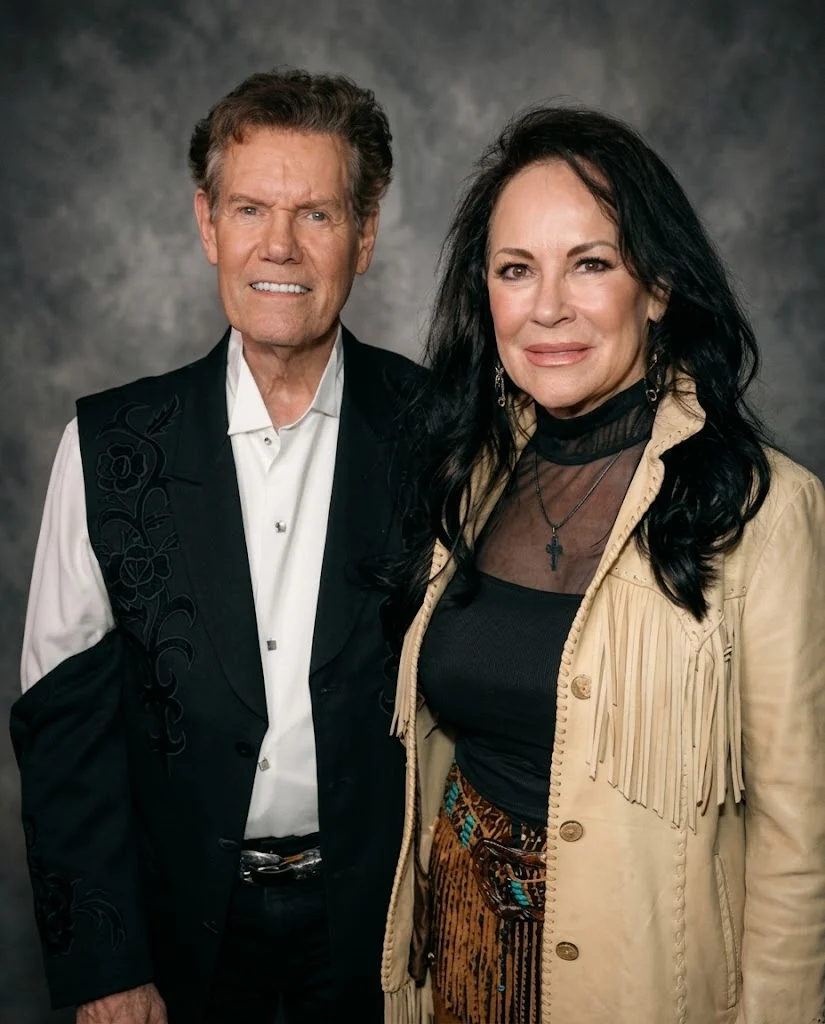
In 2012, Mary Davis stepped into Randy Travis’s life, not as a character in a flawless country ballad, but as the anchor in the center of a very public storm. While legal battles swirled and media scrutiny grew fierce, she saw the man behind the headlines—a human being worth standing by.
Then, on a terrifying Sunday in July 2013, the ultimate test arrived. A severe viral cardiomyopathy led to congestive heart failure, and a stroke threatened to permanently silence the legendary baritone voice. In a quiet Texas hospital room, the music faded completely. Randy lay unconscious, dependent on a ventilator, while doctors delivered a grim prognosis: a one percent chance of survival. They gently suggested it might be time to let him go.
But Mary made a choice that defied every medical odd. She leaned close to his hospital bed and pleaded with him to fight. When he managed to squeeze her hand and shed a tear, she adamantly fought back against the doctors’ recommendations. Her unwavering decision physically saved a country music icon when the monitors offered almost no hope. They officially married in 2015, solidifying a vow that had already survived the unthinkable.
The stroke took Randy’s signature voice and severely limited his mobility, but their most significant battles were not fought on a public stage. They happened in the quiet isolation of their home, where the journey of recovery moved to their living room. For months, out of the public eye, every single day was a grueling, relentless fight for the smallest unseen victories.
They worked tirelessly for hours just to help him learn to take a few steps across the floor with a cane. He had to relearn how to form the most basic words and phrases, struggling through the immense frustration of enunciating the simple syllables that had once made him a global superstar. Mary watched as he fought through the physical limitations, reminding the world later that he carried the heart of a warrior. He never once asked “why me,” choosing instead to push forward through the tedious, agonizing reality of severe stroke rehabilitation.
Because he could no longer speak in long sentences or tell his own stories, Mary became his literal voice. Whenever the world called him back—like his deeply emotional 2016 induction into the Country Music Hall of Fame—she stood steadfastly at his side. She gently guided him to the microphone, speaking the words of profound gratitude he could no longer form, while he stood tall and smiled warmly beside her.
When he finally managed to sing a few trembling words of “Amazing Grace” that night, it was a public victory that had been entirely built in their private living room. She gave him back to the fans, not as an active touring performer, but as a living testament to endurance, faith, and the true meaning of commitment.
The stage no longer belonged to just a solitary country singer. It belonged to the woman who kept his song alive when the rest of the world thought it was over.