
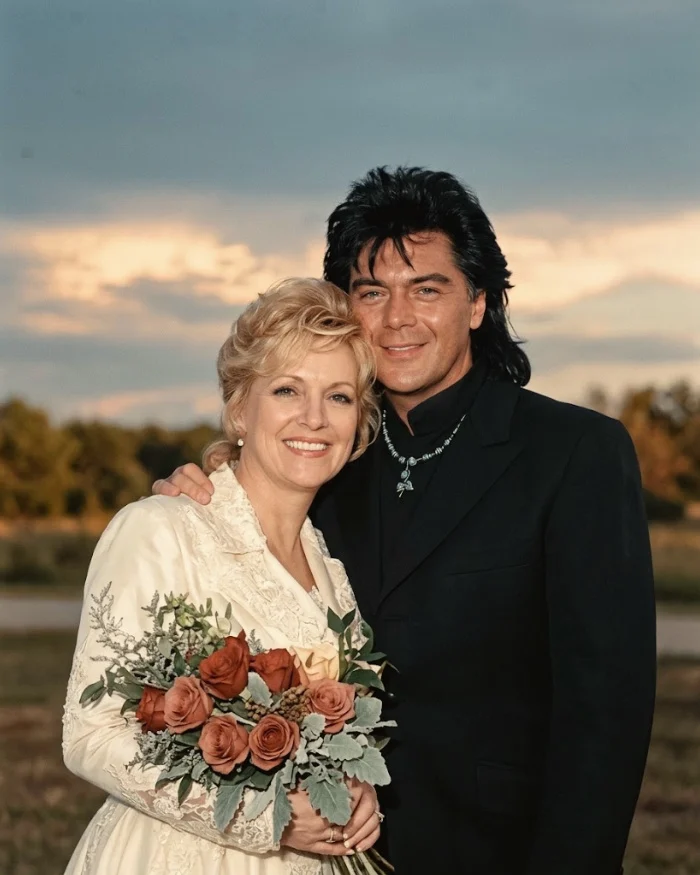
Two weary hearts found a quiet answer far from the neon rush of Nashville. On July 8, 1997 Marty Stuart and Connie Smith left the music industry behind and stood together on the open plains of the Pine Ridge Indian Reservation in South Dakota.
For Marty that land had become a second home long before the wedding. During the early 1980s while touring with Johnny Cash he began visiting the windswept grasslands of the Oglala Lakota Sioux. He listened to elders, photographed daily life, and helped honor Lakota heritage. The community later embraced him as family and gave him the adopted Lakota name O Sah Ka Wambli with the meaning Super Hawk.
Connie carried a different kind of history. She was seventeen years older than Marty and had lived through failed marriages and long years away from the road. She had stepped back in the late 1970s to raise her five children and chose domestic peace over constant career pressure.
Their bond had begun when an eleven year old Marty in a bright yellow shirt asked for her autograph at the 1970 Choctaw Indian Fair.
By the time they prepared to marry, the studio work for the self titled 1998 Connie Smith comeback album had already tested them. Nashville expected spectacle. Marty wanted something sacred. He brought Connie into the world of Lakota families who had anchored his personal life.
The ceremony had no press cameras, no publicist, and no country star guest list. A local pastor conducted the vows beneath a wide western sky while Lakota elders and close tribal friends offered traditional blessings alongside their Christian promises.
Ring, vow, and quiet plains replaced stage lights and red carpets with genuine reverence.
When the newlyweds returned to Tennessee they carried that same deliberate silence into home life. They settled outside Nashville and protected their partnership from industry optics. Their musical bond grew over decades as Marty guided Connie back into the studio for traditional projects including 2011 Talking to the Soul and 2021 The Cry of the Heart.
What began as a childhood admiration became a marriage built to last, rooted in respect, faith, and the open South Dakota land where two impossible promises finally met.