
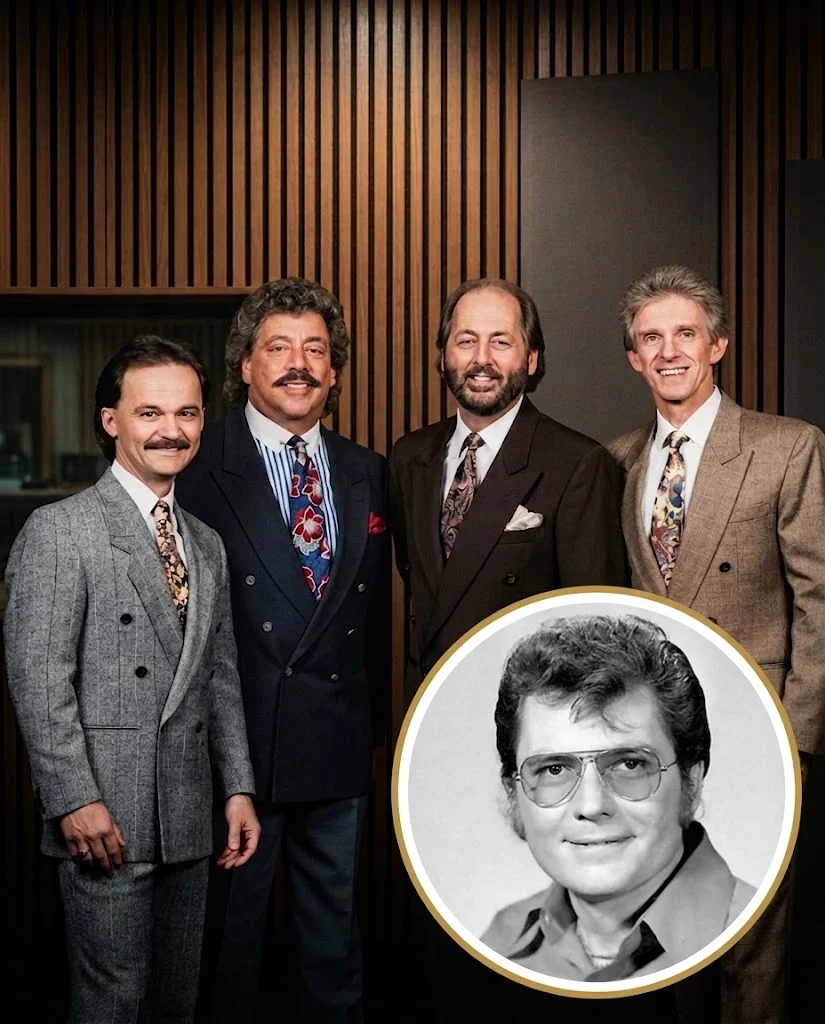
By 1973, after twelve years of marriage and with four young children at home, Lew DeWitt faced a painful divorce. For the singer whose voice had brought joy to millions, that separation became a quiet turning point and exposed the private cost of a life spent chasing harmony on the road.
Long before the packed auditoriums and national television appearances, DeWitt was a young Virginian with a pure, unmistakable tenor and a fierce ambition to sing. In 1961 he married Glenda while The Statler Brothers were still building a local following around high school auditoriums, small churches, and Virginia venues. Together they created a home that eventually welcomed four children, sharing modest beginnings as the quartet edged toward a new sound in country music.
By the mid-1960s everything changed. Johnny Cash discovered the quartet and brought them into his touring show, and their breakout hit “Flowers on the Wall” turned local favorites into national stars. The rise brought more than two hundred dates a year, long stretches away from home, and a schedule that kept DeWitt apart from his children just as they were growing up.
The road also carried a heavy physical price. DeWitt lived with severe Crohn’s disease, a chronic inflammatory illness worsened by missed sleep, irregular diner meals, and endless hours on long-distance tour buses. Painful flare-ups and sudden hospitalizations followed him, yet he kept those struggles out of the spotlight.
He stepped in front of microphones night after night and delivered clear, effortless high harmonies while bearing his heaviest burdens in private.
By 1973 the strain of constant touring and the distance between home and the road led to divorce. The split marked a somber turning point for a singer whose signature vocal arrangements had brought joy to listeners across America.
Grief and ongoing illness did not push DeWitt away from his craft. They deepened it. He channeled longing and vulnerability into songs such as “The Class of ’57” and “Pictures,” writing with a grounded honesty that blended everyday nostalgia with hard-earned wisdom.
In the early 1980s escalating health issues forced him to retire permanently from touring with The Statler Brothers, stepping away from vocal arrangements he had spent decades perfecting. Even after leaving the stage he stayed devoted to music, releasing solo work and earning deep respect across the industry until his death in 1990 at age fifty-two.
Lew DeWitt gave American country music some of its most enduring harmonies. Behind the spotlight stood a dedicated father and artist who turned real-world struggle into music that still resonates with listeners across generations.