
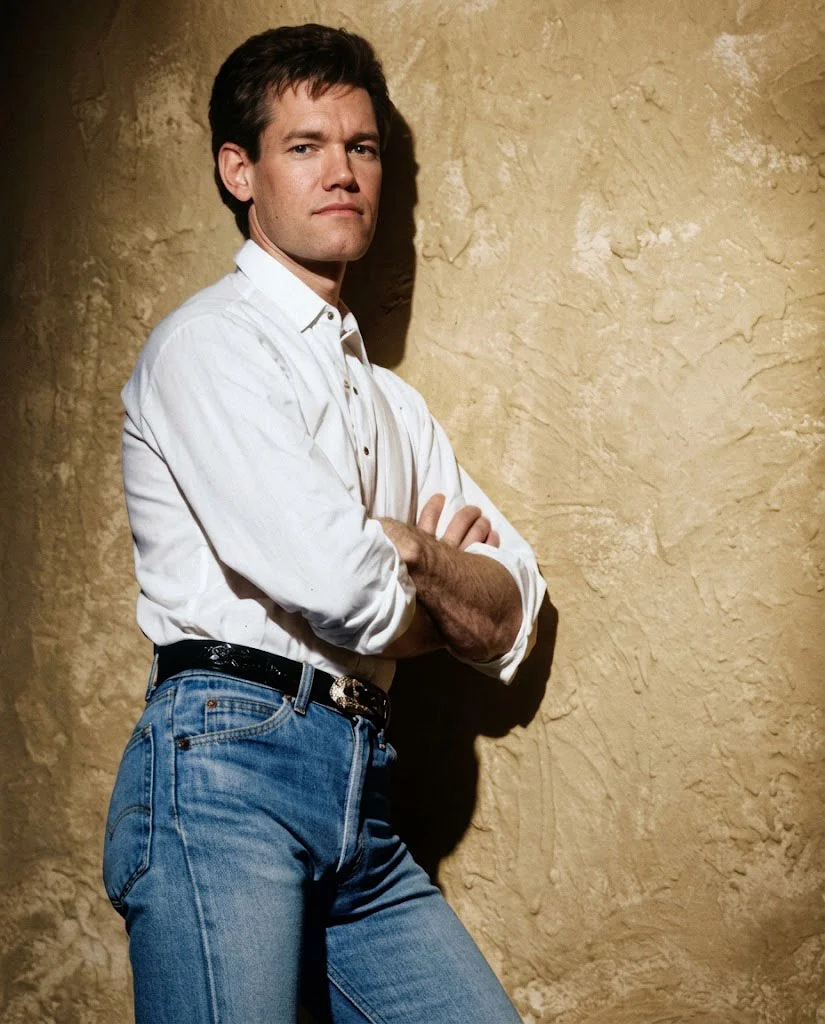
In 2016 the Country Music Hall of Fame ceremony fell silent as a man who had once washed dishes in a Nashville kitchen rose to the microphone with his wife Mary at his side. His steps were uncertain after a 2013 stroke caused by viral cardiomyopathy. The stroke permanently affected his mobility and took away his ability to speak and sing in full sentences. His voice had been stolen by the same body that once carried one of country music’s most commanding baritones. Yet he fought through the physical devastation and offered a halting brave version of “Amazing Grace.” The room of modern stars wept with reverence. They were not pitying a survivor. They were honoring the man who had rebuilt the foundation beneath their feet.
That foundation began in the early 1980s at the Nashville Palace, a busy club near the Opryland complex. A young man from North Carolina worked as a fry cook and spent his nights clearing tables and washing dishes. When the live music schedule allowed, he dried his grease stained hands and walked from the kitchen into the stage lights. He sang with a voice that seemed carved from old honky tonk wood. When the last note faded and applause filled the dining room, he returned to the sink.
They did not reject him for a lack of talent. They rejected him because his pure resonant baritone was judged too country for a modern radio friendly market.
Music Row in that era wanted polished pop country crossover. Label after label turned the young singer away. Executives did not hear a lack of skill. They heard a voice they considered too country for a modern radio friendly market. They asked him to smooth his edges and leave his traditional acoustic roots behind. He refused.
His manager Lib Hatcher refused to let the dream die. She booked his club gigs and paid for early demo recordings from her own money while the industry kept looking in the wrong direction. The breakthrough came in 1985 when Warner Bros executive Martha Sharp heard the singer almost every major label had dismissed. She did not hear a relic. She heard the missing soul of the genre. With producer Kyle Lehning she helped him leave the stage name Randy Ray behind and become Randy Travis.
The path was not instant. His debut single “On the Other Hand” first stalled at number 67 on the Billboard chart. After his second single “1982” became a top ten hit the label re released the first song and it rose to number one. Then came Storms of Life in the summer of 1986. The album sold three million copies and did far more than top charts. It scraped away the synthetic gloss of the decade and pulled country music back toward its wooden floor foundations.
He did not bend his voice to fit Nashville. He made Nashville remember what it was supposed to sound like.
Travis became a superstar and sparked a neotraditional movement. He built a bridge that Alan Jackson Clint Black and Garth Brooks would soon cross toward their own historic success. The kitchen worker from the Nashville Palace had never needed the industry’s permission to be traditional. He waited until the industry realized it needed him to survive.