
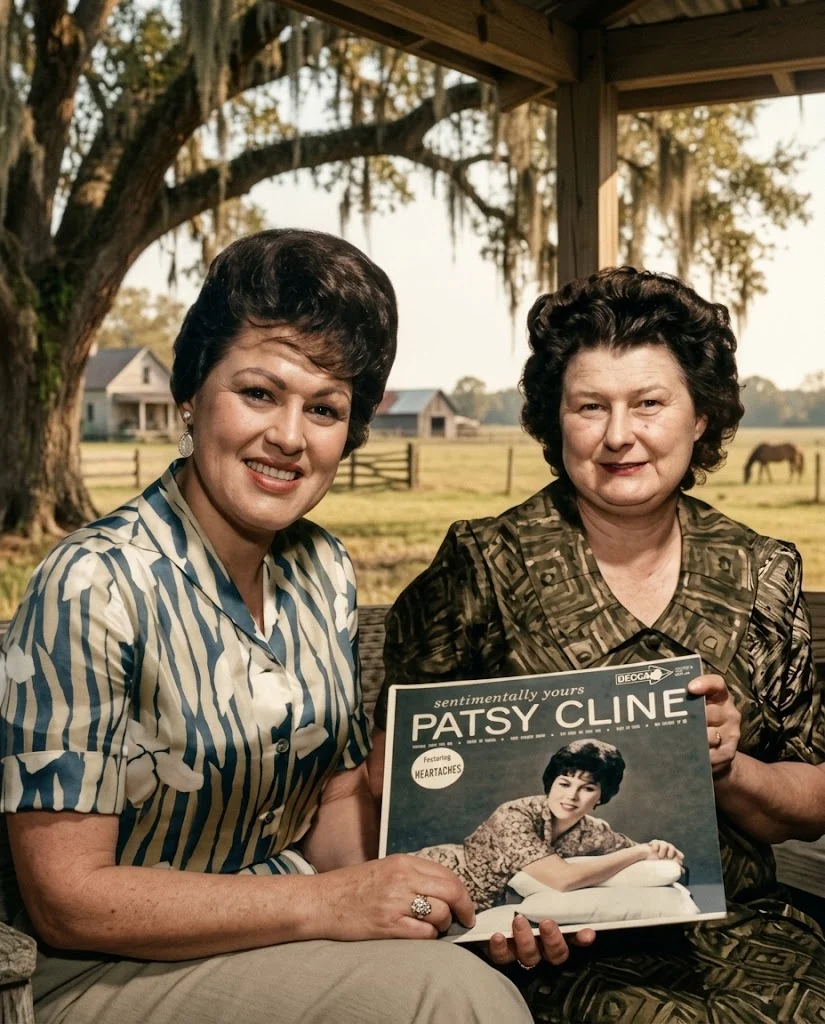
In the dim light of a 1963 plane crash site, the world lost a country music queen, but Hilda Hensley lost something far more profound: the woman she had grown up with. The story of Patsy Cline is often told through her powerful voice and her chart-topping hits, but the true foundation of her legacy was stitched together by a mother who was just sixteen years old when she gave birth to the future star.
In 1932, at the height of the Great Depression, Hilda welcomed Virginia (later known as Patsy) into the world in Winchester, Virginia. With only a sixteen-year gap between them, their relationship defied traditional mother-daughter conventions. Instead of a distant authority figure, Hilda became a sister, a confidante, and a partner in survival. Together, they navigated the crushing weight of rural poverty, their bond forged in shared hardship.
When Hilda’s marriage dissolved, she found herself the sole provider for three children, working relentlessly as a seamstress just to keep food on the table. But when Patsy’s musical dreams began to take root in the local honky-tonks, Hilda didn’t just tolerate her daughter’s ambition—she actively built its foundation. Sitting at her sewing machine, she hand-crafted the intricate, fringed cowgirl suits that would become Patsy’s signature look.
Those garments weren’t merely costumes. For a young woman entering the male-dominated country music scene of the 1950s, they were handmade armor.
Every embroidered yoke and detailed piping was a quiet act of rebellion, giving Patsy a visual identity as striking as her voice. Hilda sourced the finest materials she could afford, meticulously stitching each outfit that would soon make her daughter a recognizable star on the regional circuit.
As Patsy climbed the ladder to fame, Hilda remained her ultimate supporter, standing quietly in the wings while her best friend conquered Nashville. Their trajectory shattered in March 1963, when a plane crash in Camden, Tennessee, took Patsy at just thirty years old. The music industry lost a reigning queen, but Hilda lost the woman she had poured her life into protecting.
While many families of fallen stars lock away painful reminders, Hilda chose a different path. She outlived her daughter by thirty-five years, passing away in 1998, and spent those decades fiercely guarding Patsy’s legacy. She refused to let the hand-sewn suits be lost to time or auctioned off to collectors who wouldn’t understand their true value. Instead, she meticulously preserved them in her Winchester home, maintaining the fabric and fringe year after year.
Hilda also maintained a deeply personal connection with the fans, answering thousands of pieces of fan mail by hand and hosting visitors who came to Virginia seeking a connection to the late singer. Because of her deliberate, decades-long efforts, those garments survived intact. Today, they sit behind museum glass in Nashville, celebrated as priceless artifacts of country music history.
In the latter half of her career, Patsy transitioned to elegant evening gowns for her crossover pop hits, but it was the handmade Western wear that built her foundation, giving her the courage to stand under the spotlight when the world was still learning her name. History books correctly credit Patsy Cline with breaking down doors for women in country music, but the preserved stitches behind the glass prove that a sixteen-year-old mother from Virginia was the one who tailored the armor she wore to do it.