
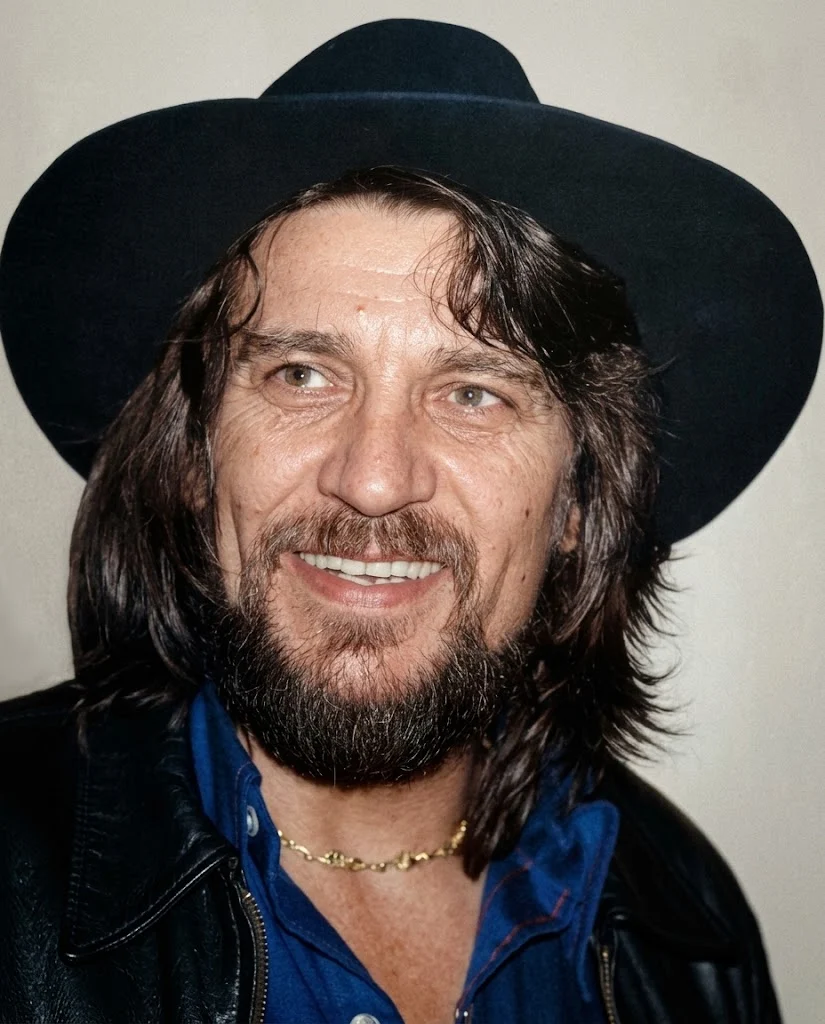
When the road finally wore him down, Waylon Jennings didn’t retreat into silence—he turned his last breaths into a defiant encore. By the late 1990s, decades of relentless touring and a brutal battle with diabetes had forced the country music outlaw to abandon the massive concerts that had made him a legend. But stepping off the bus never meant putting down the guitar.
Instead of fading into retirement, Jennings rallied his peers to form The Old Dogs and later assembled the Waymore Blues Band. For a man who had reshaped Nashville’s sound, music wasn’t a career to look back on—it was his lifeline, his daily survival.
The physical toll of his lifestyle finally struck in December 2001, when complications from diabetes led to the amputation of his left foot. For a road warrior who had logged millions of miles, it was a cruel twist. Yet he met the loss with his trademark quiet pride, refusing to become a fragile figure seeking sympathy. He remained an outsider playing by his own rules until the very end.
On February 13, 2002, at his home in Chandler, Arizona, the storm finally settled. Jennings passed away peacefully in his sleep at age 64, leaving behind 16 number-one hits and a legacy that forever altered country music.
But the story doesn’t end there. In his final years, while facing failing health, Jennings sat down with longtime bassist Robby Turner to capture what would become his last truths. Armed with just an acoustic guitar and his signature expressive baritone, he recorded a dozen stripped-down tracks—raw, intimate sessions that reflected on mortality, spirituality, and unyielding defiance.
Turner guarded those tapes for a decade, honoring the family’s privacy, before completing the instrumentation with members of The Waylors. The result was Goin’ Down Rockin’: The Last Recordings, released in 2012.
Those recordings changed everything. Waylon wasn’t quietly waiting for the end—he was actively documenting it.
The voice captured in those sessions wasn’t weakened by illness or defeat. It remained steady, untamed, and undeniably his own. He was still bluffing the reaper, letting out one last creative howl before the curtain fell.
His passing offered a quiet conclusion to a fiercely loud life. The highway eventually ran out, and his body forced him to rest. But the tapes proved what his fans always knew.
The outlaw never laid down his guitar. He just played it where the rest of the world could no longer see him.