
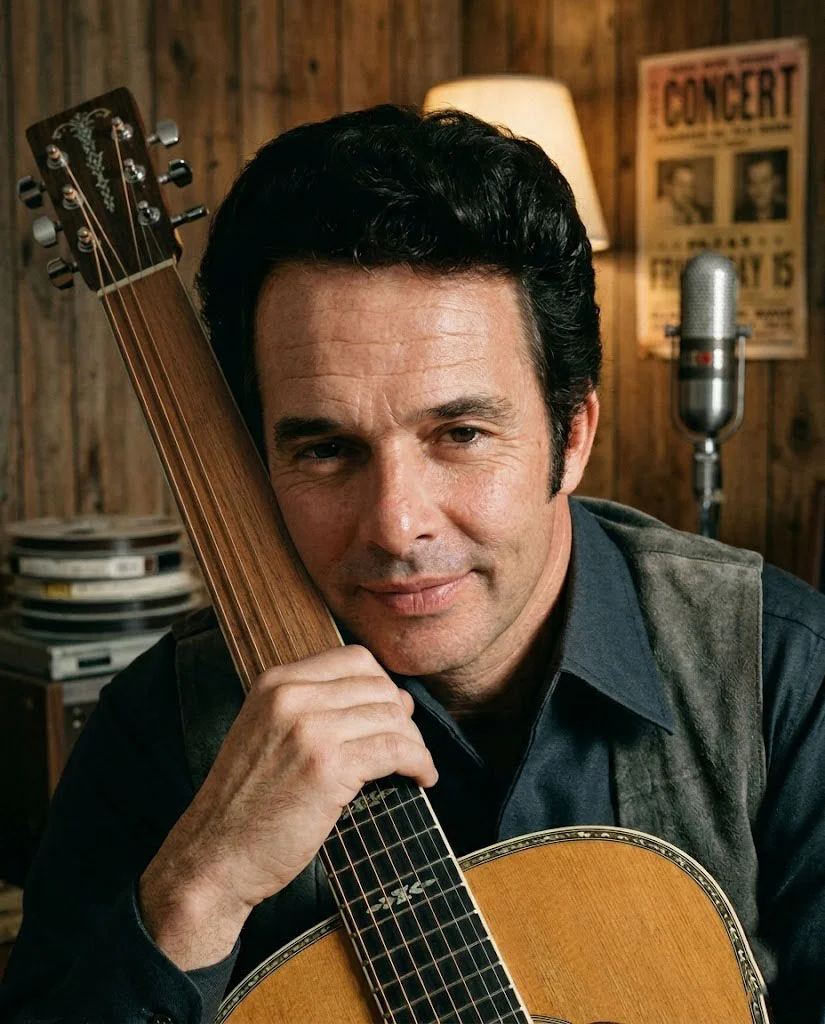
On his 79th birthday, Merle Haggard passed away — but the confession he made at his ranch years earlier still echoes louder than any of his 38 number-one hits.
“I’m scared of the loneliness. It’ll get awful quiet, awful quick.”
Those weren’t the words of a man who feared crowds or failure. They were the words of a man who feared stillness — the quiet that follows the applause, the silence that waits after the last song fades.
Long before the sold-out arenas and the outlaw poet persona, Merle Haggard was just a restless young man walking out of San Quentin at 23, carrying a past that never fully loosened its grip. Prison changed him, but it never completely released him.
When the gates opened, freedom didn’t feel clean. The past walked out beside him — memories, guilt, and the constant awareness of how easily a life can collapse when a man loses control of himself.
That experience stayed in his voice forever. Listeners trusted Merle because he never sounded polished in a false way. He sounded worn, honest, like someone who understood consequences intimately enough to stop pretending life was simple.
Then came the music. And suddenly, the same man who once sat in a prison cell became one of country music’s defining voices — the working man’s philosopher who turned regret, pride, loneliness, and survival into songs millions carried through their own difficult years.
But success didn’t silence the fear underneath him. If anything, it gave him more places to run.
Tour after tour. Bus after bus. One more highway stretching toward another crowd loud enough to drown out the quiet waiting afterward. Because Merle Haggard never sang like a man trying to impress audiences. He sang like a man trying to survive himself.
That difference mattered. You could hear it in the restraint of his voice, in the ache beneath his phrasing, in the way even his strongest songs carried exhaustion around the edges.
Near the end, his body finally began losing the fight the road had postponed for decades. He was backstage on oxygen, too weak to finish his own shows. Friends worried he could barely stand some nights. Still, he walked onto the stage anyway — partly because the paycheck would keep his band working, but also because stopping had always frightened him more than exhaustion itself.
The road gave him purpose, motion, noise — a reason not to sit alone too long with his thoughts.
He never recovered. On April 6, 2016 — his 79th birthday — Merle Haggard died, as though life had quietly drawn a perfect circle around him and decided his running was finally over.
And somehow, that old confession feels even heavier now. Because after all the fame, all the standing ovations, all the songs that made him immortal, the thing Merle feared most was not death itself. It was stillness. It was the quiet room waiting after the crowd disappeared. The empty space where memories speak loudest.
Maybe that is why his music still lingers so deeply today. Beneath the legend was something painfully human — a man who escaped prison, built a remarkable life, and still spent decades trying to stay one step ahead of the frightened younger version of himself.
Not healed. Not untouched. Just honest enough to admit the truth most people spend their whole lives avoiding: that sometimes the hardest thing in the world is not surviving the past. It is sitting quietly long enough to hear it coming back toward you.