
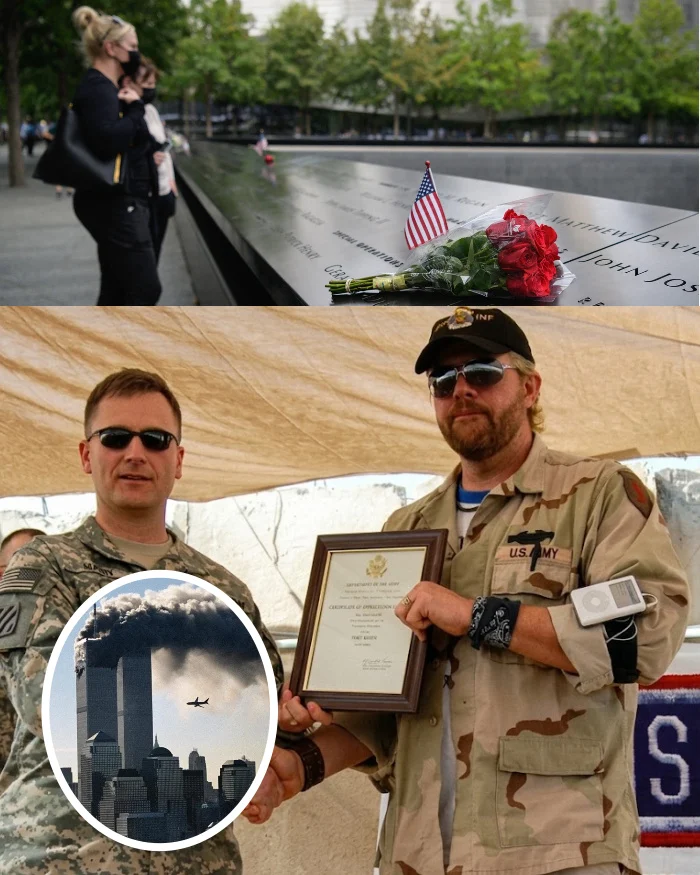
After the final chord faded over a desert base in Afghanistan, Toby Keith did not walk off the stage. He stayed in the wind and dust, shaking hands, listening to fear, and hugging every service member who waited. That quiet choice, repeated across war zones for decades, revealed the man behind the loud country anthem.
When the towers fell in 2001, America turned to music for anger and grief. Toby Keith became one of the loudest voices of that fractured era. His defiant country songs filled stadiums, television screens, and radio waves. The industry often reduced his patriotism to a brand, but the real story began away from cameras.
Keith carried a private grief after the death of his father, H.K. Covel, an Army veteran who shaped his respect for military life. In that pain, he wrote “Courtesy of the Red, White and Blue” as a personal tribute. He did not plan to sell it. He wanted to play it for troops, not for the charts.
That changed when Commandant of the Marine Corps General James L. Jones heard the song in Washington, D.C. The general told Keith the troops overseas needed to hear it. Keith recorded it, and the song became one of the most debated anthems of the post-9/11 years.
For Keith, the record was not the finish line. It became a promise. Over twenty years, he joined 11 USO tours. He flew into Iraq, Afghanistan, and other dangerous places. He performed more than 200 shows for more than 250,000 deployed troops.
He avoided the safest headquarters. He asked to ride blackout helicopters to forward operating bases. In Kandahar and Camp Leatherneck, he sang on makeshift stages built from scrap wood, iron, and truck beds. The crowd sometimes heard distant mortar fire instead of stadium cheers.
For the troops, the gift was not just a song. It was proof that someone from home had come close enough to danger to look them in the eye.
Yet the concerts were only the beginning. Keith stayed after the music ended. He stood in harsh heat or cold for hours. He asked young soldiers about their fears. He posed for photos. He refused to leave until every person in line received a hug.
The stadium anthems cemented his fame. The dust, handshakes, and long lines revealed his character. Toby Keith’s deepest legacy was not printed on a chart. It lived in the memory of veterans who knew he had chosen to stand with them long after the cameras left.