
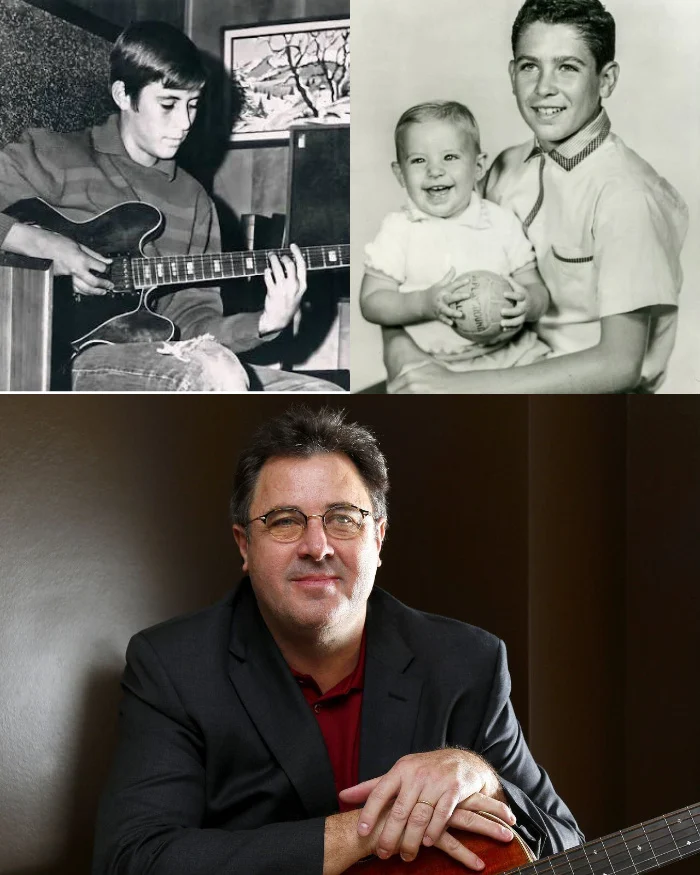
Long before the trophy case glowed with Grammy Awards, Vince Gill sat in Los Angeles with a guitar, a tired heart, and a rent bill that never seemed small enough.
It was the late 1970s, and he was moving between small bluegrass outfits and local country rock bands. Each gig paid just enough to keep hope alive and not enough to erase fear.
He found a brief flash of stability when he joined Pure Prairie League. In 1980, he sang lead on the pop crossover hit “Let Me Love You Tonight.” That moment made the world feel possible. Then the band’s momentum stalled, the lineup fractured, and Gill was unemployed again.
By the early 1980s, poverty had become a constant companion. He was married, preparing to raise a young daughter, and wondering whether music could ever feed his family. The practical answer seemed to be a retreat to Oklahoma and a steady paycheck.
Many parents would have urged that safe path. His mother, Jerene Gill, chose a different road.
She watched her son fight for every dollar and carry the shame of not having enough. She did not demand a plan. She did not ask him to abandon his gift. She offered a quiet permission that changed everything.
She simply told him that she just wanted a happy son, not a rich one.
Those words lifted the crushing weight of financial expectation from his shoulders. Jerene gave him the freedom to remain poor as long as he kept playing. Released from the pressure to chase a paycheck, Gill kept reaching for the music.
He left California for Nashville, Tennessee, accepting that he might only ever be a background player. He worked as a session musician and a backing guitarist. He joined Rodney Crowell’s legendary backing band, The Cherry Bombs. He also lent his flawless tenor voice to other artists’ records just to keep the electricity turned on at home.
Even after he secured a solo recording contract with RCA Records in 1983, the struggle did not vanish. He released a string of moderate singles that failed to break through to the top of the country charts. Fellow musicians on Music Row respected him deeply, yet he remained a commercial underdog.
He was known as a phenomenal instrumentalist who could not yet find a massive hit of his own. That gap between respect and reward could have broken a lesser spirit. Gill held on through those lean years because his mother had given him emotional ground to stand on.
When his RCA deal ended, he did not quit. He signed with MCA Records and began working with producer Tony Brown. He wanted to record music that reflected his traditional country and bluegrass roots.
In 1989, he recorded the album When I Call Your Name. The following year, the heartbreaking title track, featuring a soaring harmony vocal by Patty Loveless, reached country radio. It became a monumental career defining smash.
The song earned Gill his first Grammy Award in 1991. It transformed him from a struggling session player into a marquee country music superstar.
Over the next three decades, Gill sold more than 26 million albums, collected 22 Grammy Awards, and earned induction into the Country Music Hall of Fame. Yet he remained famously grounded, generous, and kind to his fellow musicians.
He never forgot the lean years, or the woman who gave him permission to endure them. The foundation of one of country music’s greatest careers was never built on desperate ambition. It was built on a mother’s selfless wish for her son to simply be happy.