
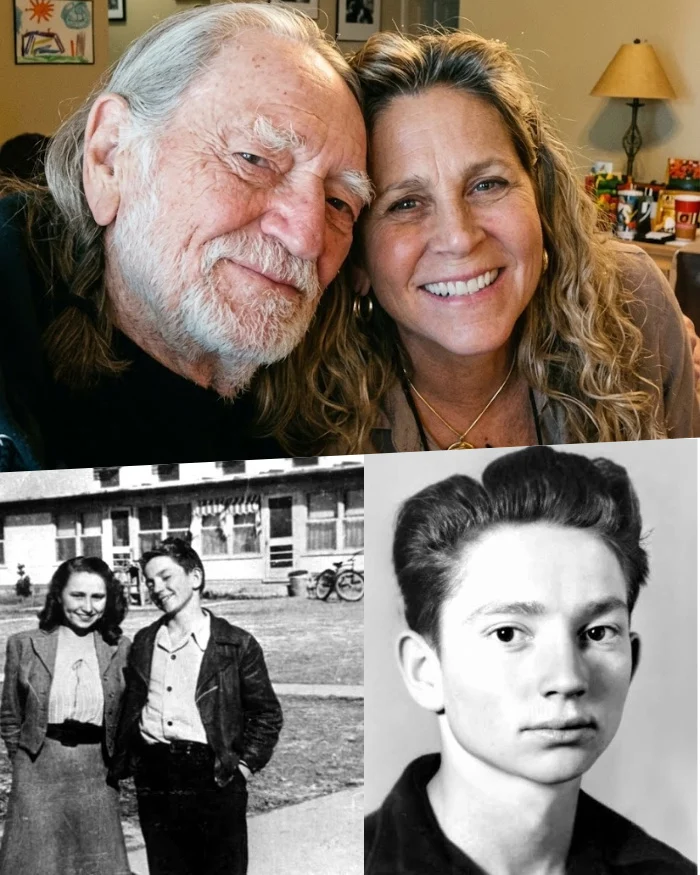
Before country music knew his name a small Texas boy carried hunger through cotton rows and found freedom in a battered guitar.
Willie Nelson was born in Abbott, Texas, in 1933 as the Great Depression pressed hard on the South. His parents Ira and Myrle left to search for work and a different future. Willie and his older sister Bobbie were left with their paternal grandparents William and Nancy Nelson.
The Nelsons had almost no money. In rural Texas survival demanded every hand. By seven Willie worked in brutal heat beside grown men picking cotton from dawn to dusk. The fields were punishing. The pay was tiny. Yet that labor carved endurance into him and placed him among the farmhands and working poor who would later live in his songs.
His grandparents gave the child something the Depression could not take away. Music filled their home. William worked as a blacksmith and bought a mail-order music course. Nancy taught piano. When Willie was six William scraped together money for a Stella guitar from the Sears Roebuck catalog. He taught the boy basic chords and opened a path through country music.
“That guitar was not a toy. It was a way to breathe.”
The instrument became a lifeline. It softened the sting of being left behind and offered escape from exhaustion and hunger. Willie learned quickly. He began writing his own songs almost at once and carried the guitar into taverns and dance halls and onto small-town school stages. By nine he played for loose change and brought coins home to help feed his family.
Those cotton fields and that devotion never washed off Willie Nelson. They shaped the weathered honesty in his voice. They helped turn a child forced to fight for survival into a free-spirited artist who would always stand up for the little guy.