
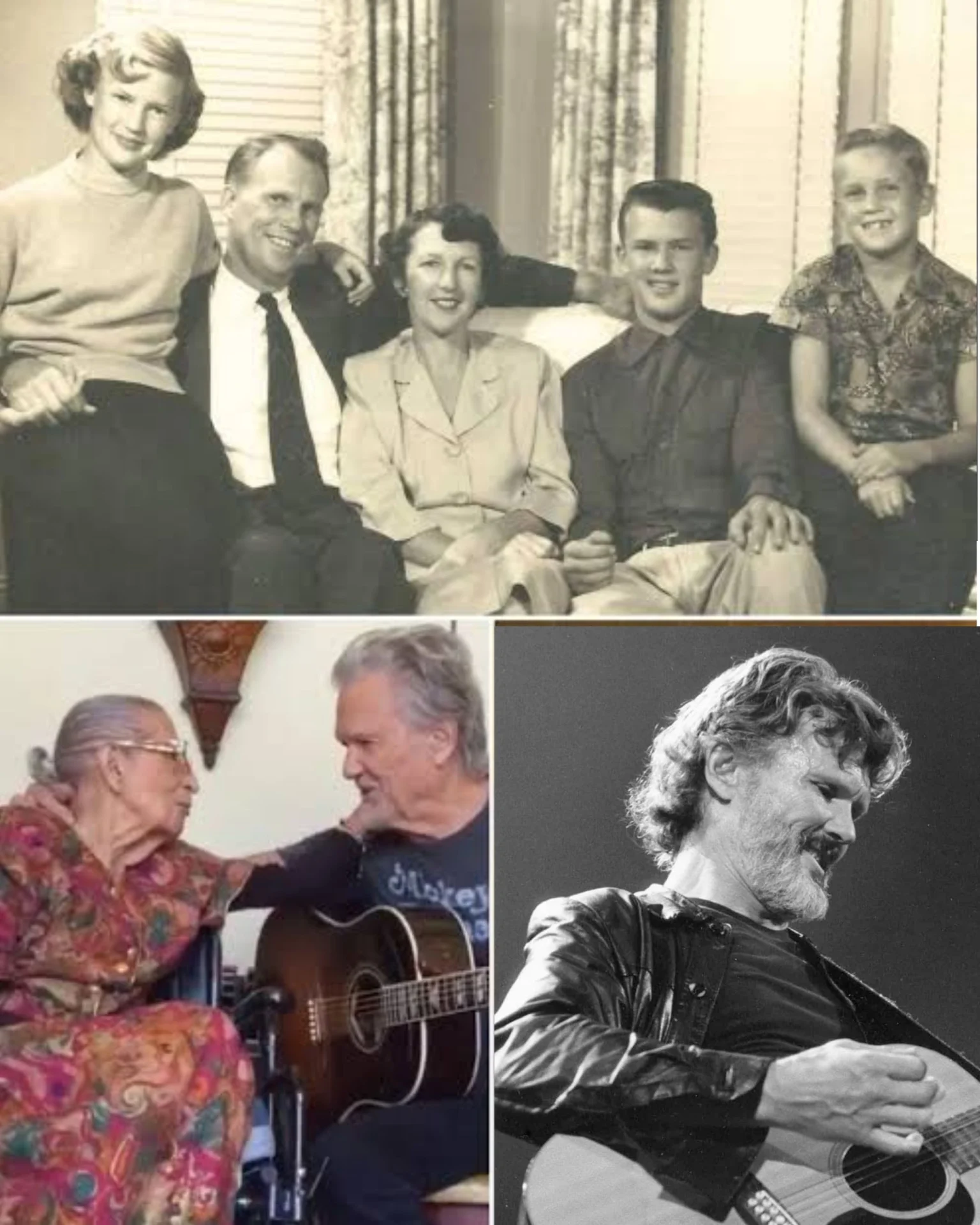
Kris Kristofferson never described his final reconciliation with his father as a grand family scene. There was just a beer—the first they had ever shared. That detail stayed with him because it marked a moment years in the making, a quiet bridge across a chasm of misunderstanding.
His father, Major General Lars Kristofferson, had spent decades unable to grasp why his son, a Rhodes Scholar, an Army captain, and a helicopter pilot, would walk away from a prestigious teaching post at West Point to write country songs in Nashville. In 1965, Kris resigned his commission and moved his young family to Music City. The decision shattered more than a career plan; it ruptured his relationship with his parents and contributed to the end of his first marriage.
“His mother regarded the choice as a humiliation and instructed him not to visit relatives.”
Nashville offered no immediate vindication. Kris swept floors and emptied ashtrays at Columbia Records, flew helicopters to offshore oil rigs, and spent years pitching songs that went unrecorded. His parents saw a highly educated former officer dragging his family through instability for an ambition that might never pay off.
But the songs traveled far beyond anyone’s predictions. Ray Price recorded “For the Good Times.” Johnny Cash carried “Sunday Morning Coming Down” into American living rooms. Janis Joplin’s rendition of “Me and Bobby McGee” hit No. 1 after her death. Kristofferson became the writer he had always insisted he was.
Success softened the distance between father and son, but it didn’t erase the years behind it. Lars admitted he still didn’t understand what Kris loved about songwriting. What he understood was the refusal to be talked out of it. No one, he said, could have stopped him from becoming a pilot either. Then he apologized.
Kris carried that exchange into his own parenting. As the father of eight, he tried to pass along the permission his father had only been able to give him late in life: follow the work that belongs to you, even when the people who love you cannot yet recognize it.
His parents had expected their son to teach literature at West Point. Instead, people they would never meet learned his words from records. The family name survived the choice they feared—but Kris changed what it meant to honor it.