
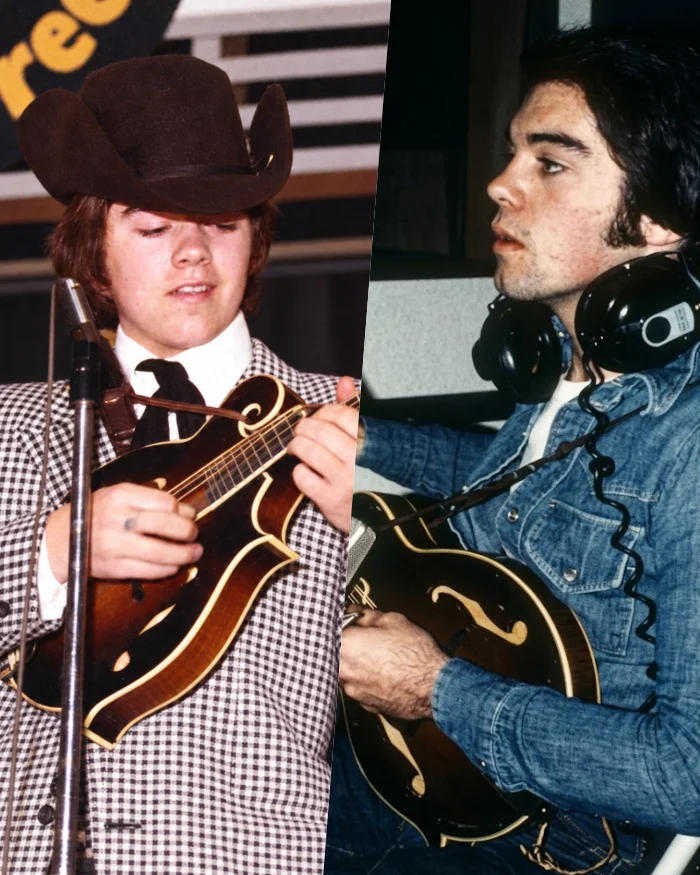
When Marty Stuart’s bronze plaque was placed in the Country Music Hall of Fame in 2020, the circle finally closed. It had started in 1972 with a fourteen-year-old boy clutching a mandolin on the vibrating floor of a tour bus. That boy had traded his childhood for the roar of a diesel engine and the steady discipline of Lester Flatt.
In the autumn of 1972, just weeks after his fourteenth birthday, Marty Stuart left his hometown of Philadelphia, Mississippi. He joined Lester Flatt and the Nashville Grass. He left behind schoolrooms and childhood friends. Life on the road offered no gentle transition. He learned to feed coins into laundromat machines at late-night stops. He curled up on the vibrating floor while the engine roared beneath him.
The road taught me discipline and respect for tradition. It was a hard school but it gave me everything I have.
Behind the curtain, he witnessed the heavy realities of grown men working through fatigue and financial strain. Yet on stage, there was no room to falter. Flatt placed strict professional trust in the boy. He motioned him toward the microphone for mandolin solos before demanding bluegrass crowds. The fourteen-year-old met the pressure with steady hands. He sent most of his paychecks home to his mother in envelopes.
When Lester Flatt died in 1979, Stuart was barely twenty years old. He carried seven years of professional bluegrass experience. Instead of retreating, he moved into the orbit of other tradition-bearers like fiddler Vassar Clements and Doc Watson. He soaked up regional styles and unwritten stage rules.
The most transformative chapter arrived in 1980 when Johnny Cash invited Stuart to join his band. Standing beside Cash on global stages was a masterclass of a different order. Cash showed him how presence, stillness, and historical weight could command an arena. Stuart spent five years in Cash’s immediate circle. He played rhythm and lead. He absorbed the older man’s reverence for rural storytelling and American history.
During those years, Stuart noticed the physical remnants of country music’s golden era were quietly disappearing. Costumes, handwritten lyrics, instruments, and backstage ephemera were often tossed into dumpsters. Stuart started rescuing them. He purchased Hank Williams’s handwritten lyrics and Patsy Cline’s stage finery. Later he acquired the historic 1954 Fender Telecaster known as Clarence originally played by Clarence White.
By the early 1990s, Stuart launched his solo breakthrough with hits like Hillbilly Rock and Tempted. He dressed in rhinestones and elaborate Nudie suits alongside Travis Tritt on the No Hats tour. He looked like a rebel but his foundation remained anchored in the strict discipline from Flatt’s bus floor. He was not parodying the past. He was carrying it forward in broad daylight.
As commercial trends shifted in the late 1990s, Stuart refused to soften his sound. Instead he formed the Fabulous Superlatives with guitarist Kenny Vaughan, drummer Harry Stinson, and bassist Chris Scruggs. Together they cut albums that ranged from raw gospel and Delta blues to cosmic surf-rock and high-lonesome bluegrass. They proved that tradition was an engine for innovation rather than a museum exhibit.
His long effort to preserve the music took permanent physical form through the creation of the Congress of Country Music in his hometown of Philadelphia, Mississippi. The cultural center and museum now houses his collection of more than 20,000 artifacts. It represents one of the largest privately assembled archives of country music history in the world.
In 2020, Marty Stuart was officially inducted into the Country Music Hall of Fame. The honor placed his bronze plaque in the rotunda where the names of Lester Flatt and Johnny Cash had hung for decades. The circle that began with a fourteen-year-old boy holding a mandolin case in the dark beside an idling tour bus was finally complete.