
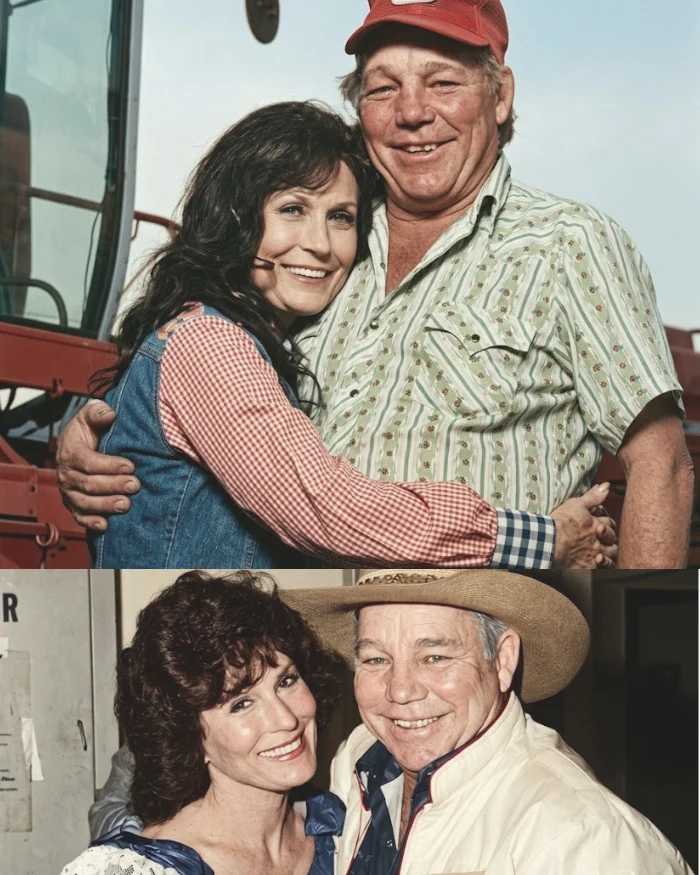
While Loretta Lynn made her historic debut at the Grand Ole Opry, the man who made it possible sat alone in a parking lot. Doolittle Lynn fumbled with the car radio, searching for the broadcast signal so he could finally hear his wife sing on the airwaves. He had driven her across the country, slept in the car, and refused to leave radio stations until they played her record. Now, as she stood under the Ryman Auditorium lights, he could not bear to watch from the wings.
But this moment of triumph almost never happened. Long before she became the Queen of Country Music, Loretta was a young mother in Kentucky coal country, married at fifteen and raising four children. She sang while doing chores, never dreaming of a stage. It was Doolittle who saw something she could not.
He scraped together seventeen dollars to buy her a guitar and told her with unwavering conviction,
You are just as good or better as most of them girls that are singing and making money on the radio.
He mailed three thousand five hundred copies of her debut single I Am a Honky Tonk Girl to radio stations in the spring of 1960. The song was only the second she had ever written, inspired by a woman she met while picking strawberries who came to a local club every weekend to cry over a broken marriage. When the records failed to spark immediate national interest, Doolittle refused to give up.
He transformed into her relentless manager. Leaving their children with family, the couple embarked on a grueling cross-country trek. They visited one small-town radio station after another, covering thousands of miles. Doolittle would walk inside and refuse to leave until the DJs agreed to play the 45 RPM record on air. To save money, they survived on bologna sandwiches and slept in the car.
Loretta, plagued by deep-seated insecurities, struggled to see her own worth. It took Doolittle’s almost blinding faith to provide the momentum she could not summon for herself. Station by station, the song began finding an audience. Working-class listeners heard a voice that sounded exactly like their own lives, unvarnished and authentic.
By the summer of 1960, the record climbed the national country charts. The relentless campaign earned twenty-eight-year-old Loretta an invitation to the most important venue in country music, the Grand Ole Opry. When the night of her debut arrived, she walked out under the lights so nervous that she tapped her foot frantically. Later she recalled
I was too overwhelmed to even listen to myself sing.
But as she delivered the song that launched her unprecedented career, the man who had willed the moment into existence sat outside in the parking lot. Doolittle fumbled with the dashboard dial, trying to find the Opry’s radio signal. And finally, he heard his wife’s voice broadcast over the airwaves to the nation.