
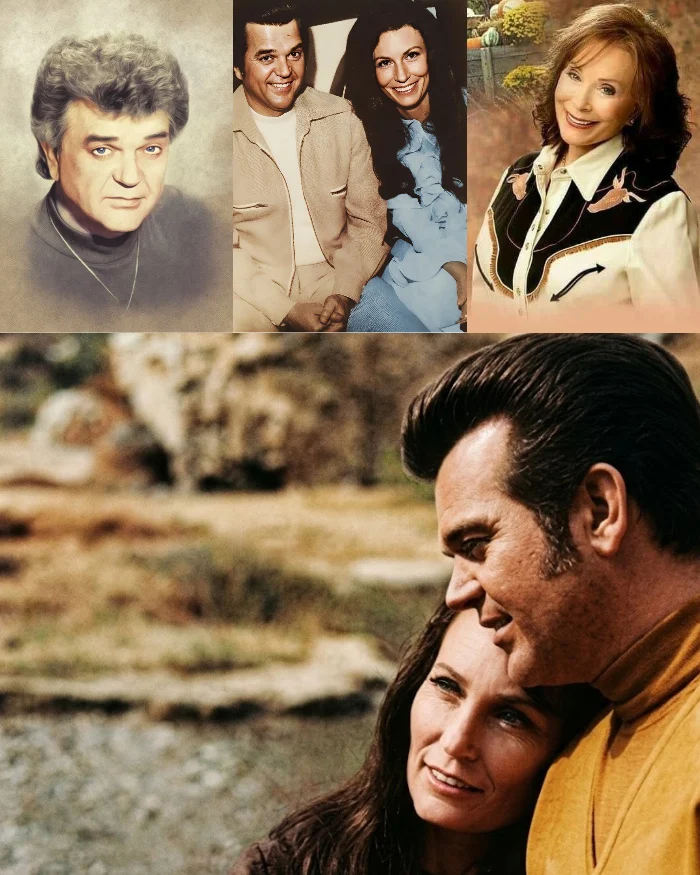
In a bold stand against corporate doubt Conway Twitty and Loretta Lynn defied Decca Records in early 1971 to create one of country music’s most legendary partnerships.
Producer Owen Bradley and label executives warned that putting two solo superstars on one record would destroy their careers. Both artists were already selling out arenas nationwide and the board feared a duet would weaken their individual brands.
Conway walked straight into the front office and told the executives plainly
he and Loretta were cutting the record and that the decision was final
. Loretta stood beside him and told management
she would shoulder personal responsibility if the project failed
.
Their shared background made the music effortless. Loretta was a coal miner’s daughter from Butcher Hollow Kentucky while Conway grew up working near the Mississippi riverfront. Inside Bradley’s Barn studio they shared one microphone with natural ease. Their debut single After the Fire Is Gone shot to number one on the Billboard country chart. Their album We Only Make Believe followed and together they earned a Grammy Award for Best Country Performance by a Duo or Group.
Between 1972 and 1975 the Country Music Association honored them as Vocal Duo of the Year four consecutive times a record that stood unmatched for decades. They released eleven studio albums and five straight number one duet hits including Lead Me On and Louisiana Woman Mississippi Man.
Their tours became legendary not just for the music but for the careful structure they built. Each artist traveled on their own separate bus with their own band Loretta with The Coal Miners and Conway with The Twitty Birds. In every city one would perform a full solo set then the other would headline. Only near the end of the evening would they step together to the center microphone for the duets the crowd had come to hear. That format demanded over one hundred shows per year across the United States and Canada making it one of the most bankable tickets in country music.
Backstage their bond remained strictly professional yet deeply loyal. Loretta rested on her bus between long drives while Conway handled business calls and band arrangements. Tabloids constantly hinted at romance but both insisted their connection was rooted in respect and protective friendship.
Conway supported Loretta through exhaustion and the chaos of rising fame. Loretta trusted Conway as a steady confidant in an industry of sudden shifts.
Their touring slowed in the 1980s but their friendship never faded. Conway died suddenly in June 1993 from an abdominal aortic aneurysm in Branson Missouri. Loretta carried his memory for the rest of her life calling him not just a gifted vocal partner but the quiet brother who once stood up to an entire record board so the music could speak for itself.