
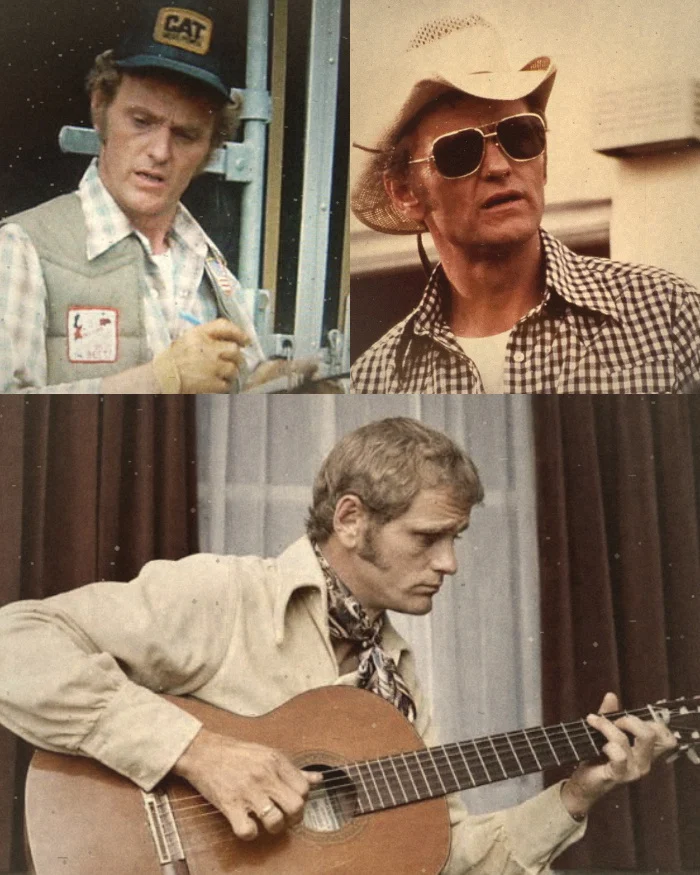
In the quiet hours of a military barracks, while his bunkmates slept, a young soldier named Jerry Reed was quietly crafting a musical future on a flat-top guitar. It was 1959, and Private Jerry Reed Hubbard, just twenty-two and newly married to singer Priscilla Mitchell, faced a daunting reality: the draft had interrupted his budding career in Atlanta, and his family was growing.
Stationed between Fort Jackson and Fort Gordon, Jerry’s military pay barely covered the needs of his household, especially with a newborn daughter, Charlotte, on the way. But instead of seeing his service as a pause in his ambitions, he used every spare moment to write and record songs. He’d capture rough demos on small tape recorders and mail the reels from the base post office to publishers in Nashville, including his old Atlanta contact Bill Lowery.
One of those unassuming packages landed on the desk of producer Owen Bradley, who was working with teenage pop sensation Brenda Lee. Bradley paired Jerry’s rhythm-driven track, “That’s All You Gotta Do,” with Lee’s ballad “I’m Sorry.” When both sides were released in the spring of 1960, the results were explosive. While “I’m Sorry” hit number one, Jerry’s song climbed to number six on the Billboard Hot 100.
The royalty checks that soon arrived were a game-changer for the young family. They provided immediate financial stability for Priscilla and their baby, and validated Jerry’s unconventional writing style on a national stage. By the time his service ended in 1961, Jerry wasn’t starting over; he was moving Priscilla and Charlotte directly to Nashville, an industry that already knew his name.
His unique sound, rooted in a self-taught clawhammer technique, quickly caught the ear of Chet Atkins at RCA Victor. Jerry became a first-call guitarist, lending his distinctive picking to records by Porter Wagoner, Bobby Bare, and even Elvis Presley. In 1967, Atkins signed him as a solo artist, and hits like “Guitar Man,” “Amos Moses,” and “When You’re Hot, You’re Hot” made him a household name, eventually leading to Hollywood roles and a place in the Country Music Hall of Fame.
Those awards and silver screens were still a distant dream when Private Hubbard mailed off his demos from a base post office. But his career was forged not in a studio, but in the quiet moments of a barracks, by a young father determined to take care of his family.