
On New Year’s Day 1953, the Canton Memorial Auditorium was packed with thousands of fans, their laughter echoing through the venue as the MC announced that Hank Williams wouldn’t be taking the stage. They thought it was a joke—a star known for his unreliability, caught in another excuse. But the laughter died in their throats as the Drifting Cowboys, his legendary band, stepped into a single spotlight, tears streaming down their faces, and began a gospel hymn for a man who would never sing with them again.
The empty microphone stand stood like a tombstone under the harsh light. The festive crowd, there to celebrate a new year, found themselves in the middle of an unplanned, devastating memorial. The contrast was unbearable—the joy of the holiday crushed by the sudden, silent void left by the defining voice of country music.
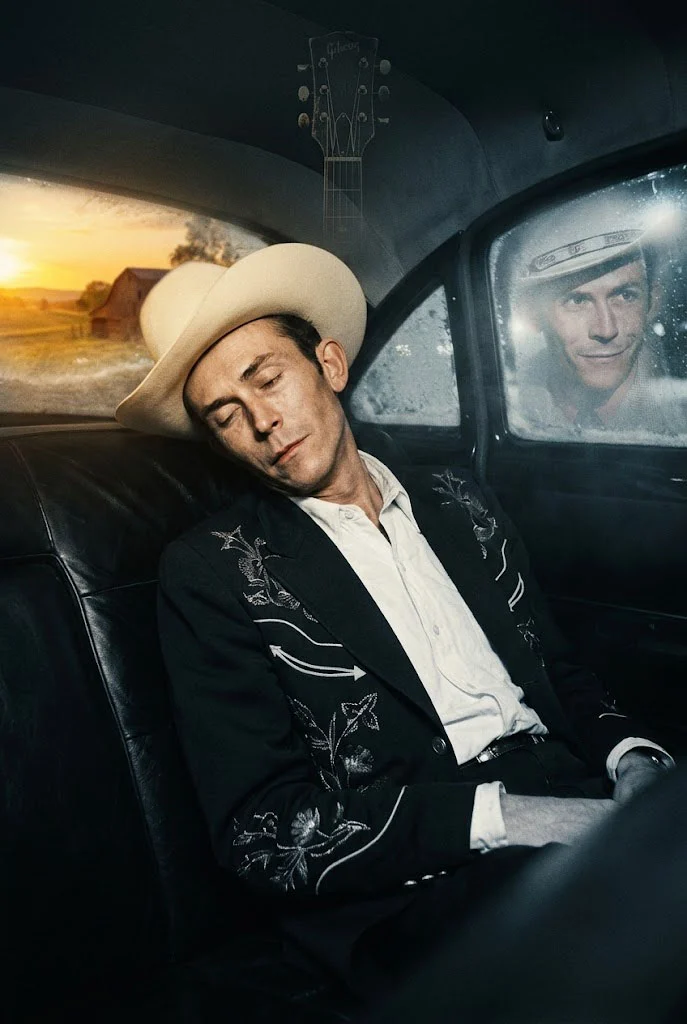
But the story of how Hank Williams got there—and how he never arrived—began the day before, in Knoxville, Tennessee. A massive winter storm had grounded his flight, and Williams, determined to make his Ohio booking, hired 19-year-old college student Charles Carr to drive him through the freezing Appalachian night in his pale blue 1952 Cadillac.
Williams, exhausted by a lifetime of congenital spina bifida, heart trouble, and the relentless toll of his lifestyle, slept in the backseat. Around midnight, a police officer in Rutledge, Tennessee, pulled Carr over for a routine stop and noted the singer seemed to be sleeping soundly. The drive continued into the bitter cold, the Cadillac slicing through the snow toward West Virginia.
At dawn, at a gas station in Oak Hill, Carr reached back to adjust a fallen blanket—and found Williams stiff and unresponsive. The highway had quietly claimed the man who gave a voice to American heartbreak.
At that exact moment, miles away, Williams’ latest single, “I’ll Never Get Out of This World Alive,” was climbing the Billboard charts. The song, a darkly humorous acceptance of an inevitable end, seemed almost prophetic—a man weighed down by pain and bad luck, singing about his own final exit.
He left behind a grieving family, a shocked industry, and a catalog of songs that would become the bedrock of modern country music. Radio broadcasts spread the news, turning a day of celebration into a collective mourning for a working-class poet.
The pale blue Cadillac had reached the end of its journey, and the microphone in Canton stood still. But the voice that left the highway that night didn’t disappear—it moved into the permanent memory of American music, where it will never be silenced.