
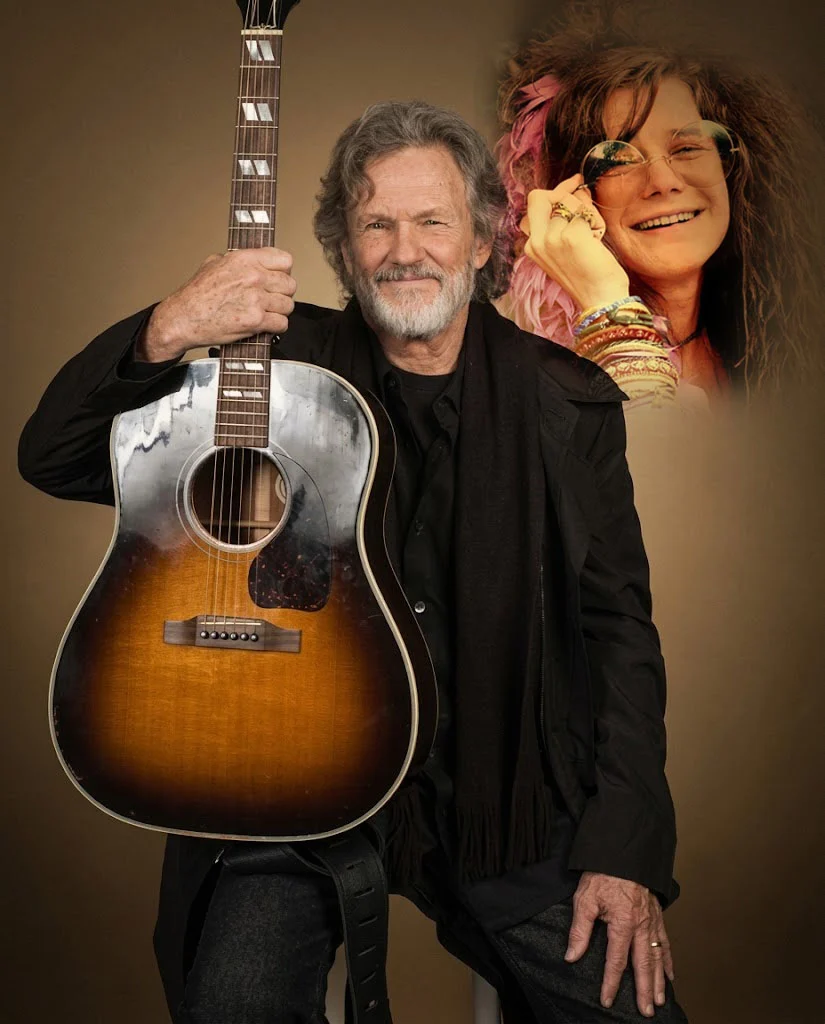
In the cold October of 1970, the world lost one of its most raw and untamed voices. Janis Joplin was gone—a fatal overdose had silenced the electric spirit that had once made stages tremble. But in a quiet, dimly lit studio, a heart-wrenching surprise was waiting to break the silence.
Kris Kristofferson, the man who had briefly and passionately loved her, stood in that room, grieving. He had no idea what was about to play through the speakers. Someone hit the button, and suddenly, Janis’s storm-weathered voice filled the air—singing his song, Me and Bobby McGee.
Just months earlier, during the fleeting romance of spring and summer 1970, Kristofferson had played her the tune on his acoustic guitar—a simple story of two travelers with nothing left but the open road and each other. He had no clue she carried it into the studio, laying down a vocal track as a secret gift for him. She never got to hand him the tape.
Days before her death, Janis poured her soul into the microphone, turning a quiet country lyric into an immortal anthem. But when Kristofferson heard those words after she was already gone, the meaning shifted. “Freedom’s just another word for nothin’ left to lose” was no longer just a line—it was a devastating prophecy.
In March 1971, the song climbed to the top of the Billboard Hot 100, becoming her only number-one hit. She wasn’t there to see it—but the world was listening to a private message, a goodbye sealed in magnetic tape.
At the very end of the recording, long after the final chords fade, you hear it: Janis lets out a joyful, uninhibited laugh. It’s not the laugh of a tragedy—it’s the eternal echo of a wild soul who was, finally, completely free.