
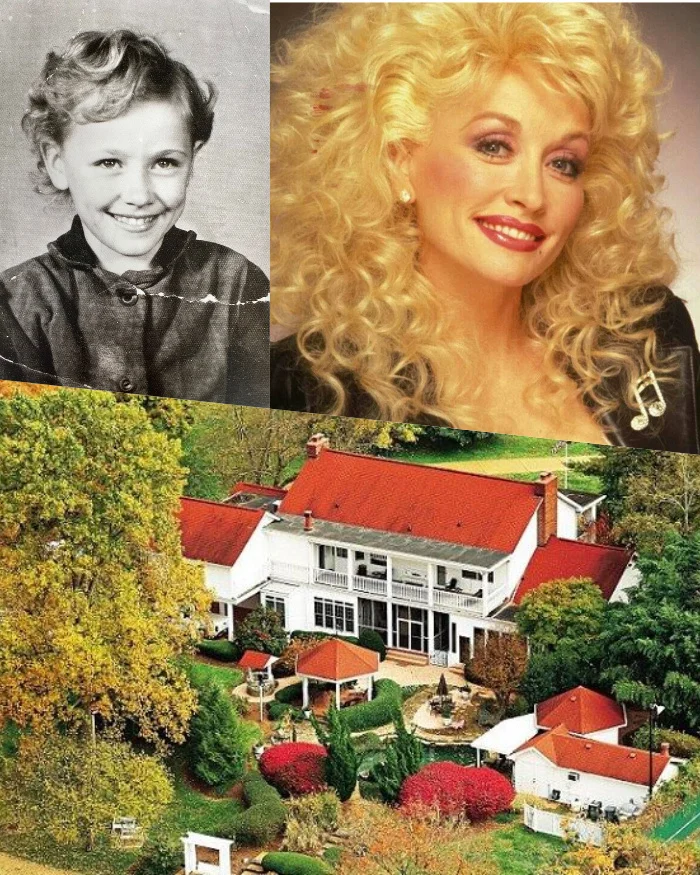
It was not the Grand Ole Opry or a sold-out stadium that held the most precious place in Dolly Parton’s heart. It was a quiet, fenced-in field in Brentwood, Tennessee, where the sound of children’s laughter and the aroma of fried chicken were the only tickets needed for entry.
Behind the gates of the sixty-acre estate she shared with her husband Carl Dean, Dolly created something the world has never seen. Camp Dollywood, a sprawling private playground, was designed not for tourists or paying guests, but for one exclusive clientele: her own bloodline. Dozens of nieces, nephews, and younger generations of Parton kin found a paradise complete with swimming pools, water slides, volleyball courts, and handcrafted wooden playhouses.
This sanctuary was the quiet fulfillment of a promise Dolly made to herself long before the rhinestones and spotlights. Growing up in a one-room cabin in Locust Ridge, Sevier County, with eleven siblings and only three beds, she knew the scarcity of space intimately. That memory fueled a lifelong dream to give her family the room to roam, play, and grow together—a dream realized on the lush grounds of her Tennessee home.
When the holidays or summer weekends arrived, the stage persona vanished. Dolly traded her sequined gowns for floral aprons and stepped into a commercial-sized outdoor kitchen. There, she cooked for over a hundred relatives, frying chicken and baking cornbread by the batch, all while keeping a strict no-cameras rule to preserve the domestic sanctity of the gathering.
To the little ones racing through the grass, she was simply ‘Aunt Granny.’ She joined their tag games, carried the tired toddlers in her arms, and handed out small treats without any ceremony. Her husband, Carl Dean, ever the private soul, was a steady, watchful presence from the edge of the lawn, ensuring the family’s rhythm remained undisturbed.
As dusk settled, the scene transformed. Acoustic guitars and banjos emerged around a massive stone fire pit. The air filled with the ancient harmonies of mountain hymns and Appalachian ballads—the very songs that had shaped Dolly’s musical soul on a porch in the Smokies decades ago. The music passed from sibling to sibling, binding the generations in a shared melody.
Behind the gates of her Brentwood estate, Dolly Parton built a private paradise where family is the only VIP, and the stage is just a patch of grass.
These gatherings were anchored by more than music. Handwritten recipe cards from her mother, Avie Lee, were brought out to ensure the flavors of their childhood home never faded. The older siblings and extended family shared stories of working the mountain fields, keeping alive the memory of those who had passed on. Over the years, as several of her beloved siblings were lost, Camp Dollywood became more than a playground. It transformed into an emotional sanctuary—a place where the family could hold together against the pull of time and fame.
The world knows Dolly for her anthems and her philanthropyuden. But the true compass of her life points to those private Tennessee afternoons. No stage, no crowd, no applause could ever match the quiet field where she could simply be home, surrounded by the people who knew her not as a star, but as Aunt Granny.