
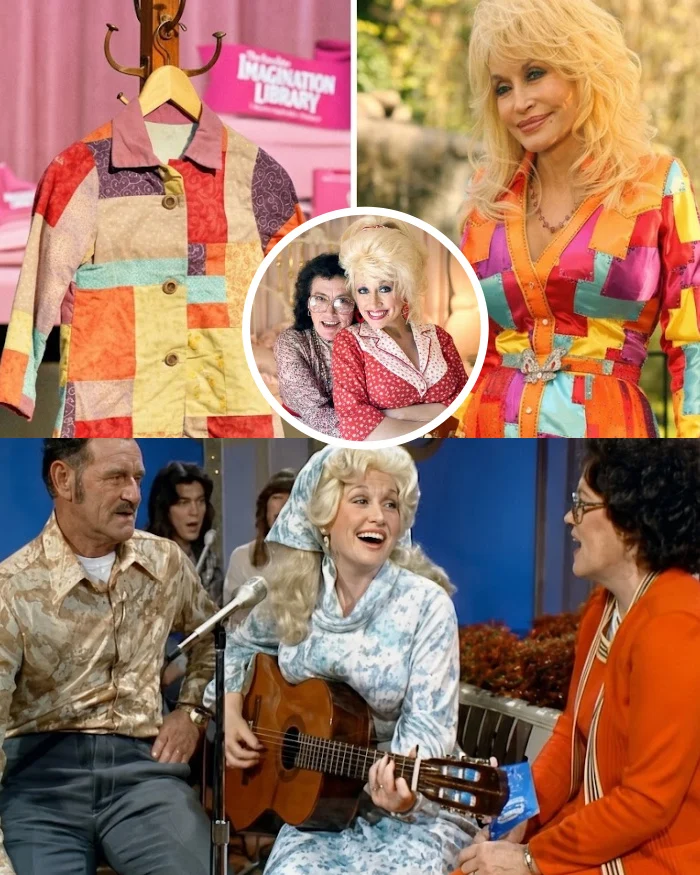
The rhinestones made Dolly Parton a global star. The song she has called her proudest achievement was stitched from scraps.
Long before the towering wigs and sparkling stage costumes, Parton was a child in a one room cabin in the Smoky Mountains. Her mother, Avie Lee, raised twelve children there. When winter pressed close, Avie Lee took small pieces of fabric and made a patchwork coat for her young daughter.
To help the girl feel special, her mother compared the homemade garment to the biblical story of Joseph. The child wore it proudly to school. Classmates mocked her for wearing rags. She stood her ground and explained the love sewn into every stitch.
Her mother’s love, Dolly Parton has said, kept her from ever feeling poor.
That memory became ‘Coat of Many Colors’. Out of the huge catalog she wrote, Parton has consistently named the song as her greatest source of pride. It is not a commercial anthem. It is a direct recollection of her mother’s quiet sacrifice.
Years later, Avie Lee rarely went to lavish entertainment events. On one night during her daughter’s rising career, she sat near the front row of a theater. Parton looked out and saw the woman who built her foundation. The seasoned performer, known for absolute professional control, broke down. She choked on the words and could not finish the chorus.
The theater fell into respectful silence. Then the crowd stepped in with supportive applause. Avie Lee wept as her private sacrifices were honored in public. Her daughter wept under the sudden weight of childhood memory.
The glittering outfits defined Parton’s fame. That broken vocal performance revealed where her strength came from.
The original coat had a hard life. The child wore it every day until it fell apart and was repurposed into household rags. The story did not end in the mountains. After the song became a cultural touchstone, Avie Lee carefully sewed an exact replica of the patchwork jacket so her daughter’s legacy could be preserved.
Today that second coat sits behind glass at the Chasing Rainbows Museum at Dollywood. Beside it is another fragile piece of family history, a simple dry cleaning receipt.
In 1969 Parton was riding on a tour bus when memories of her mother rushed back. She could not find a proper notepad. She grabbed Porter Wagoner’s dry cleaning receipt and scribbled the entire story in the aisle.
Wagoner recognized the weight of what she had created. He kept the small slip of paper, had it professionally framed, and eventually donated it to the museum.
The massive productions and chart records caught the world’s attention. The real legacy was rooted in quiet, grounded artifacts. The coat and the faded receipt remain permanent reminders that Parton’s greatest wealth arrived long before she ever stepped onto a stage.