
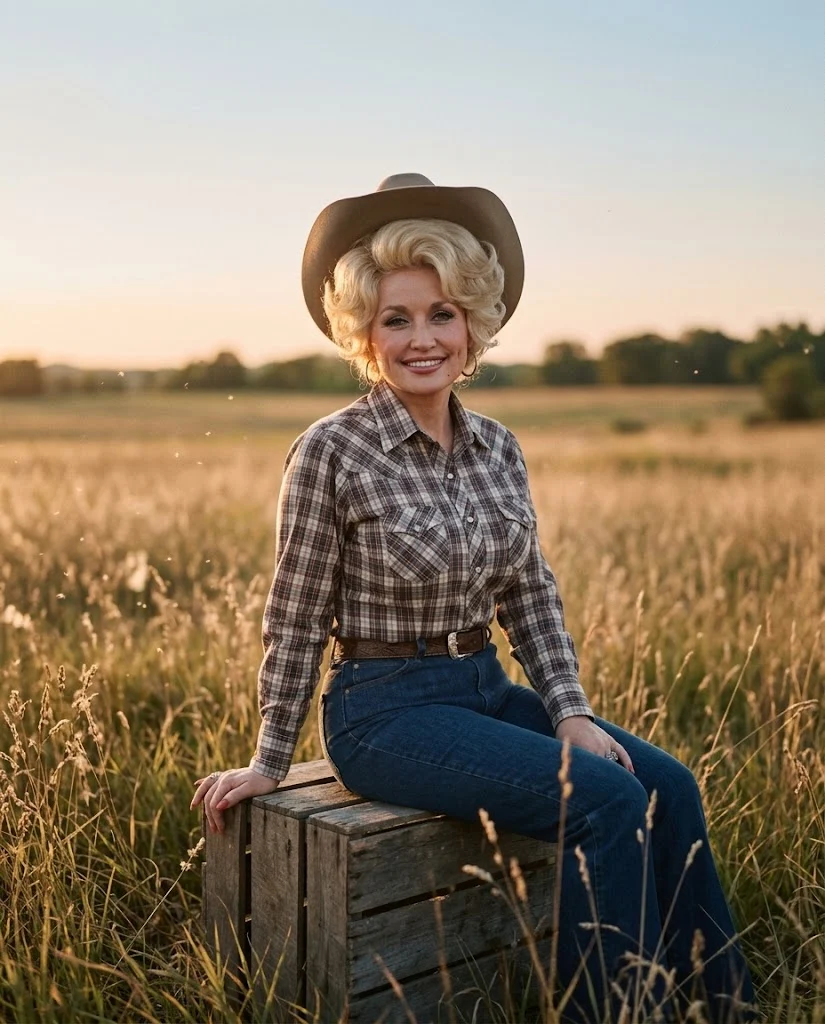
She conquered global popularity without compromise, but her greatest triumph was reinvesting her fortune into the very mountain soil that raised her.
Dolly Parton reached the highest levels of global fame, yet she intentionally modeled her famous look after a local town tramp and spent millions building her empire right back in the dirt road county that raised her. When Dolly Parton achieved worldwide fame, industry executives assumed she would permanently trade rural East Tennessee for the manicured estates of Beverly Hills or the gated enclaves of Nashville. Instead, she chose an unprecedented path for a superstar at the peak of her commercial power. She turned directly toward Sevier County, an economically depressed Appalachian enclave, and began channeling her personal wealth into building a lasting economic engine for her home community.
Instead of leaving the Great Smoky Mountains for the safety of New York or Los Angeles, Parton poured tens of millions of dollars into Pigeon Forge, Tennessee. The construction of Dollywood brought thousands of steady jobs directly to the impoverished region she grew up in.
Her lifelong visual aesthetic was itself an act of quiet defiance. Growing up as one of twelve children in a one room cabin on Locust Ridge, Parton had openly admired the local town woman everyone else looked down upon, a woman who wore bright lipstick, towering bleached hair, tight clothes, and high heels. To a young girl surrounded by dirt floors and hand me down dresses, that woman represented unapologetic glamour. When Parton built her public persona, she modeled her look after that exact style, refusing to sanitize her appearance for polite society.
She never tried to sanitize her background to fit the expectations of high society. She openly embraced the label of a hillbilly and kept the massive hair, heavy makeup, and flashy clothes inspired by a local woman she admired as a child. She turned what could have been an insult into a shield of permanent pride.
That radical loyalty to her roots defined every commercial venture that followed. In the mid 1980s, Parton sought a meaningful way to revitalize the struggling timber and agricultural economy of her childhood home. Rather than selling out to distant corporate developers, she partnered with the Herschend family in 1986 to redevelop their existing theme park site in Pigeon Forge. She structured the enterprise so that Dollywood would prioritize local labor, preserve traditional crafts, and keep administrative decision making rooted squarely in Tennessee.
Dollywood quickly expanded into the largest individual employer in Sevier County, generating thousands of stable and year round jobs for multiple generations of local families. Artisans, blacksmiths, woodcarvers, and Appalachian musicians were given steady paychecks and global platforms to showcase heritage trades that were rapidly disappearing from modern America.
That loyalty extended far beyond her wardrobe. While dominating the pop and country charts, she continued releasing acoustic bluegrass albums driven by the banjo and Appalachian dulcimer to preserve the sounds of her youth. Even while collecting major industry accolades, Parton refused to dilute the musical traditions of the Great Smoky Mountains. During the late 1990s and early 2000s, she stepped back from contemporary commercial production to record landmark acoustic bluegrass projects like The Grass Is Blue and Little Sparrow. Supported by mountain banjos, fiddles, and autoharps, she preserved the raw and haunting harmonies she had learned on front porches as a child.
She demonstrated that real cultural authority is not earned by shedding your heritage to fit the mold of someone else, but by carrying that heritage proudly onto the largest stages of the world and using the rewards to lift up the people you left behind.
Her philanthropic work followed the same deeply personal blueprint. In 1995, Parton founded the Imagination Library in Sevier County to mail free and age appropriate books every month to children from birth until kindergarten. When she launched the Imagination Library to give away hundreds of millions of books worldwide, she proudly named her illiterate sharecropper father as the direct inspiration for the project. She created the program specifically in honor of her father, Robert Lee Parton, an intelligent and hardworking sharecropper who had never been taught to read or write. What began as a localized community project eventually expanded across multiple countries, distributing more than two hundred million books to young readers.
Her thick Southern accent never changed. Throughout six decades under bright studio lights, Parton never altered her authentic mountain cadence or downplayed her hardscrabble origins. She took the hardest and poorest parts of her mountain childhood, from the patched coats to the physical exhaustion of her parents, and refused to hide them behind the stage rhinestones.
She proved that true cultural power comes from carrying your exact origins onto the biggest platforms. How she specifically negotiated the massive land deals for Dollywood to ensure local workers benefited first remains a masterclass in quiet business strategy. She demonstrated that real cultural authority is not earned by shedding your heritage to fit the mold of someone else, but by carrying that heritage proudly onto the largest stages of the world and using the rewards to lift up the people you left behind.