
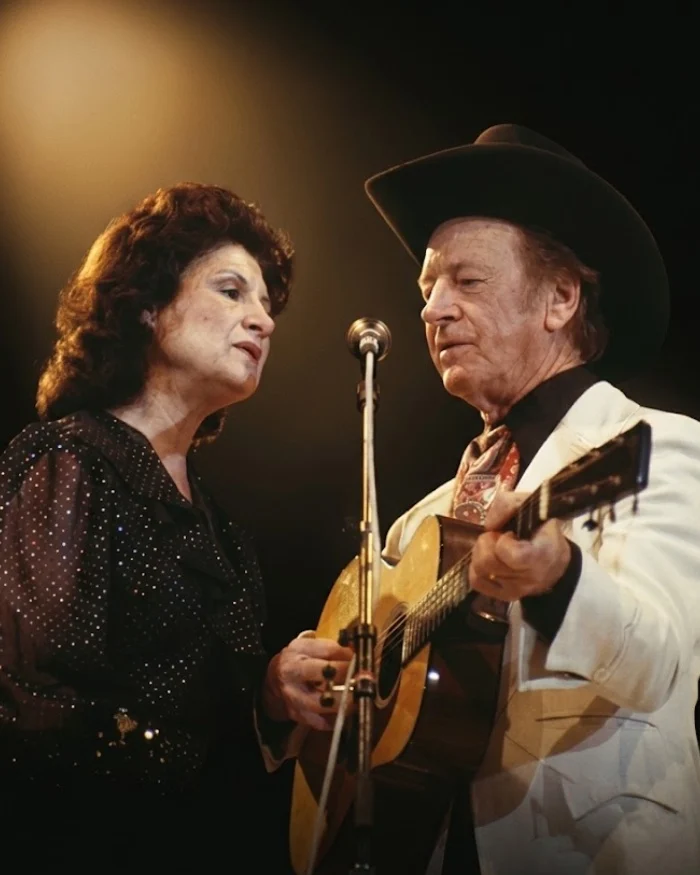
Deep in the heart of the 1940s American South, long before she claimed her crown as country music royalty, Kitty Wells lived a life measured in dust, exhaustion, and unwavering devotion.
When eighteen-year-old Nashville native Ellen Muriel Deason married ambitious string-band musician Johnnie Wright in 1937, she traded a conventional domestic life for the unpredictable and grueling path of the traveling radio circuit. Alongside Johnnie and his musical partner Jack Anglin, the young family navigated the unpaved backroads of North Carolina, West Virginia, and Louisiana, chasing a meager living built entirely on 15-minute morning radio slots and twenty-five-cent schoolhouse admissions.
Behind the glittering allure of early country music lay a relentless cycle of hardship. Wells carried the heavy dual burden of motherhood and band logistics, managing three young children while taking care of the group’s daily needs. Money was scarce, and unexpected car repairs or rainy days could instantly wipe out their weekly earnings.
“She refused to let hardship show on the stage, keeping the fire burning through the cold mountain nights.”
Late at night, when the rest of the touring party finally collapsed into sleep, Wells remained awake in cramped, drafty boarding rooms. Using a small portable kerosene stove originally packed to warm baby bottles, she carefully dried and pressed the men’s white stage shirts just inches above the gentle flame. That quiet discipline ensured that no matter how poor their circumstances, her husband and his partner always stepped in front of the morning radio microphones looking entirely professional and dignified.
That extraordinary partnership, forged across thousands of unpaved miles and decades of shared sacrifice, ultimately laid the unshakable foundation for a legendary seventy-year marriage and a voice that would forever echo the true heart of working America.