
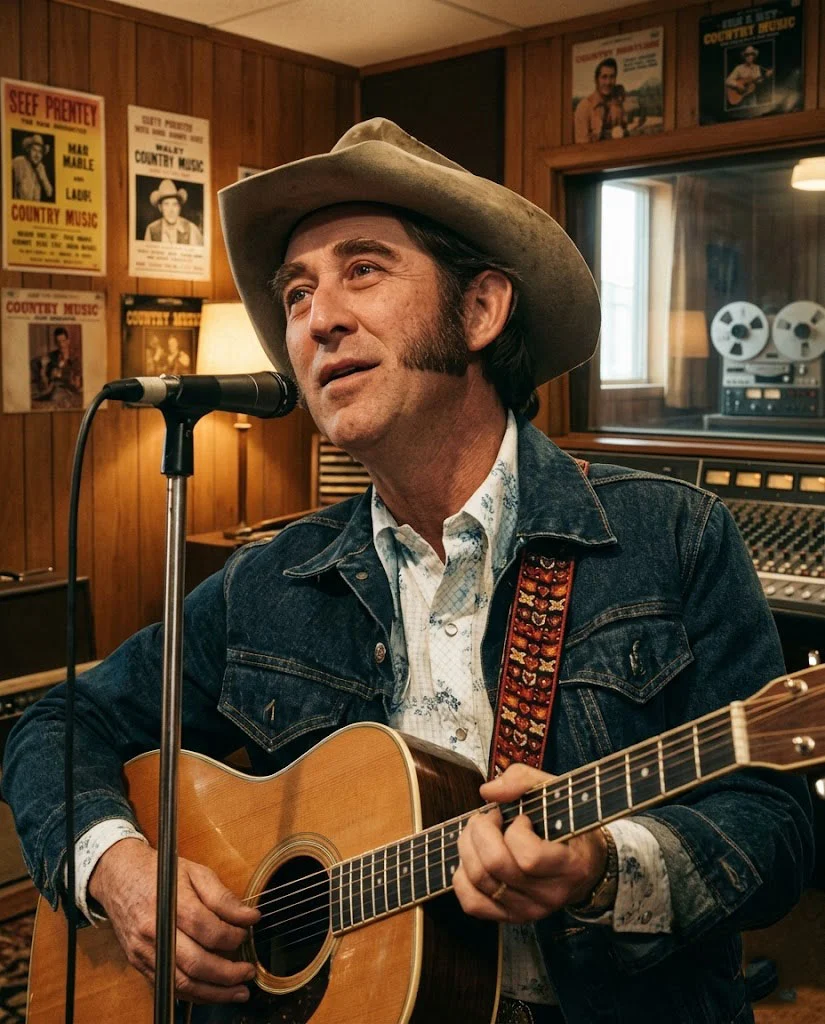
When Don Williams recorded “Lord Have Mercy on a Country Boy,” he sounded like a man standing at the edge of a field while the world that raised him slowly changed shape behind him.
By then, the Gentle Giant of country music had no need to shout for attention. His quiet voice had already earned trust. His restraint had made stillness unforgettable.
Yet this song carried a heavier ache. It was not a simple love letter or a tale of heartbreak. It was a calm confession about rivers, open land, and the spaces that shape a person vanishing before the next generation can learn their names.
He did not sing with anger. He sang with the peaceful grief of someone watching time replace a familiar world.
That gentleness made the loss feel sharper. The song painted wide fields, trees bending in the wind, and a silence large enough for a man to hear his own thoughts. Beneath those images sat a painful truth.
Places that form people do not always survive long enough to form the people who come after them.
By the early 1990s, country music was moving toward louder production, bigger stages, and faster careers. The sound Don Williams helped define felt tied to another era. Still, he never chased trends. He never forced reinvention. He remained exactly who he was.
That honesty became the heart of “Lord Have Mercy on a Country Boy.” Many singers might have turned the sadness into a dramatic protest about fading traditions. Don refused. He sang like a man recognizing fences, roads, and noise closing in around a field he once knew by heart.
No bitterness remained. Only recognition. And that restraint was devastating.
Listeners felt more than countryside. They felt belonging. They felt the loneliness of a world moving forward without asking whether anyone was ready to leave part of themselves behind.
Sometimes that feeling arrives when a hometown changes. Sometimes it appears at a family table with empty chairs. Sometimes it settles in when the places that raised a person exist mostly in memory.
Don Williams never overexplained that ache. He trusted silence enough to let each listener place their own grief inside the song.
In 1991, “Lord Have Mercy on a Country Boy” quietly became his final Top 10 country hit. There was no grand announcement. No dramatic farewell. No planned curtain call.
It felt like a quiet goodbye from a country boy who stood still long enough to make everyone hear what was disappearing.
Years later, the record still lingers because it never tried to overpower the listener. It simply asked for attention. It asked for mercy. It asked a generation to remember the open spaces that once taught them who they were.