
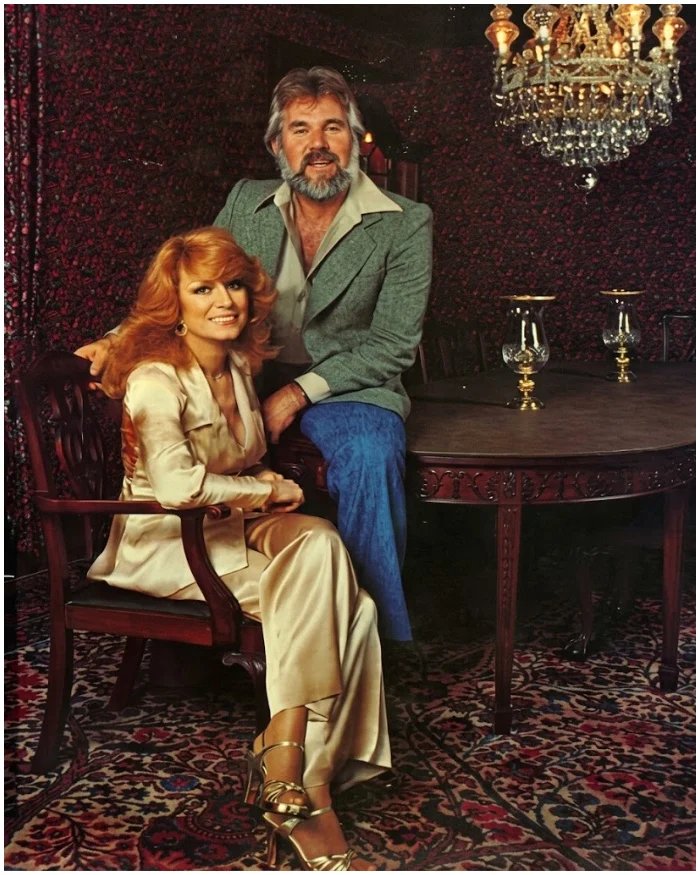
In the summer of 1991, country music legend Kenny Rogers made a promise to his dearest friend and duet partner, Dottie West. He planned a private dinner in Nashville to lift her spirits and help her navigate the crushing financial ruin that had stripped her of her mansion, her gowns, and her awards. But a last-minute scheduling conflict forced him to cancel. He never got the chance to reschedule.
Just days later, on the night of August 30, 1991, West’s car broke down on her way to the Grand Ole Opry. Determined not to let her fans down, she asked her 81-year-old neighbor, George Thackston, to drive her. As they exited Briley Parkway at over 55 miles per hour, the car went airborne and crashed into the concrete median. West, still conscious, begged paramedics to help her elderly neighbor first—unaware that her own liver and spleen were critically ruptured.
Rogers rushed to Vanderbilt University Medical Center, where doctors told him West was comatose and could no longer hear. But he refused to believe her spirit had left. He held her hand and whispered his love, his gratitude, and his deepest apologies, hoping she could still feel his presence.
“I just wanted her to know I was there,” Rogers later said of that final, silent bedside vigil.
West passed away on September 4, 1991, at 9:43 a.m., during her third surgery. She was 58 years old. Rogers sang at her funeral, stood by her daughter Shelly West, and later appeared in the 1995 film Big Dreams and Broken Hearts: The Dottie West Story to honor the woman who had changed his life.
Their partnership began by pure chance in late 1977, when a delayed flight made Rogers hours late to producer Larry Butler’s Nashville studio—walking straight into West’s recording session. Instead of sending one of them home, Butler suggested they sing together. That accidental night produced “Every Time Two Fools Collide,” a No. 1 hit that launched a string of chart-topping duets and two CMA Vocal Duo of the Year awards.
West had been a pioneering female voice in country music since the 1960s, while Rogers was just breaking through as a solo star. Together, they became one of the genre’s most beloved and successful partnerships, selling out arenas and reshaping what country duets could be.
But by 1990, financial devastation had taken its toll. After a costly divorce, bad investments, and mismanagement, West owed the IRS over $1.3 million. In June 1991, her belongings—including her stage gowns, awards, and even her baby grand piano—went to public auction. She was living in a modest condominium, planning a comeback, when Rogers reached out with that fateful dinner invitation.
The meal never happened. The conversation never took place. And for the rest of his life, Kenny Rogers carried the weight of that missed connection—a final chance to comfort his closest friend, lost forever to a scheduling conflict and a tragic highway accident.