
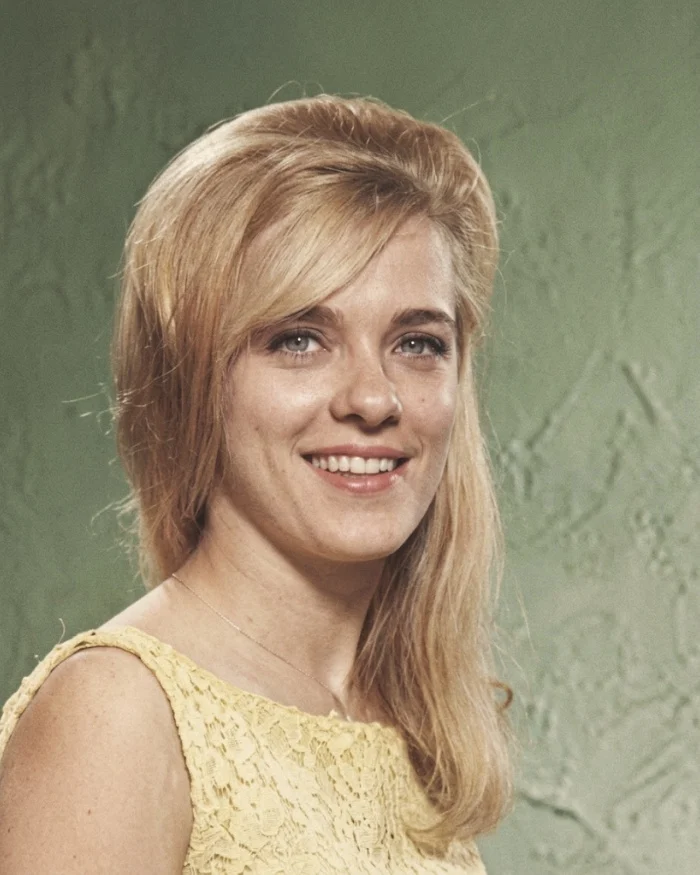
Five years after she lay in a hospital bed wondering if she would ever walk normally again, she stepped into a Nashville recording studio and cut a debut single that stayed at number one for eight straight weeks. The voice that carried Connie Smith to history was first discovered in forced stillness, on a seven dollar guitar.
In 1959, an 18 year old girl in Ohio was pushing a lawnmower when a severe accident severed her leg to the bone. The catastrophic injury nearly cost Constance Meador her leg entirely, immediately halting her transition into adulthood and confining her to a hospital bed for months.
Facing complex surgeries and the terrifying prospect of spending the rest of her life in a wheelchair, her world abruptly shrank to the four walls of a recovery room. While her friends and peers were outside experiencing their youth, Connie lay immobilized, fighting through severe physical pain and the crushing weight of an uncertain future.
Hoping to offer a small distraction during the endless days of convalescence, a family member brought her a cheap guitar. She bought the acoustic instrument from an uncle for seven dollars, and her mother sat with her and helped teach her the first rudimentary chords. In the profound quiet of her confinement, those heavy and basic strings became a lifeline.
Connie slowly taught herself to form her first clumsy chords. As she endured the agonizing and slow process of healing and physical rehabilitation, she began to sing, pouring her fear and isolation into the music. What began as a simple way to survive a makeshift prison transformed into a fierce and enduring love for traditional country music. The instrument gave her a voice when her body could not move.
By August 1963, four years after the accident that nearly stripped away her mobility forever, the young woman, now married and known as Connie Smith, walked onto a stage at the Frontier Ranch country music park near Columbus, Ohio. She had entered a local talent contest, singing with the undeniably powerful and aching vocal delivery she had first forged during her long recovery.
Country music star and songwriter Bill Anderson happened to be at the park that afternoon. He heard Smith sing and immediately recognized the raw strength and vulnerability in her voice. That chance encounter altered the trajectory of her life.
Anderson soon invited Smith to Nashville, Tennessee to perform alongside him on Ernest Tubb Midnite Jamboree. Her performance on the legendary radio broadcast caught the attention of RCA Victor executives and prominent producer Chet Atkins, leading directly to a major label recording contract.
In July 1964, just five years after she had been trapped in a hospital bed, Smith stepped into a Nashville recording studio. She cut Once a Day, a heartbreaking ballad Anderson had written specifically for her voice.
Released later that year, the single steadily climbed to the top of the Billboard country chart. It reached number one and stayed there for eight consecutive weeks. The historic run set a record for a debut single by a female country artist that remained untouched for nearly fifty years, and the sweeping and unprecedented success established the Connie Smith Sound overnight.
The tragedy that threatened to strip away her mobility ended up giving her wings.
By 1965, she was officially made a member of the Grand Ole Opry, joining the very institution she had listened to on the radio as a child. She would go on to release dozens of studio albums, earn multiple Grammy nominations, and secure a permanent place as one of the most respected and definitive vocalists in the history of the genre.
That brutal season of recovery in 1959 could have easily broken her spirit or silenced her ambitions. Instead, the forced stillness of that year became the accidental foundation of a historic life and career, forging the undeniable and aching vocal power that carried her forward. The tragedy that threatened her future ended up giving her the tools to build a completely new one.
In 2012, Smith was formally inducted into the Country Music Hall of Fame. Fifty three years after a devastating injury nearly cost her a leg, she stood at the pinnacle of country music, carried there by the voice she first discovered on a seven dollar guitar.