
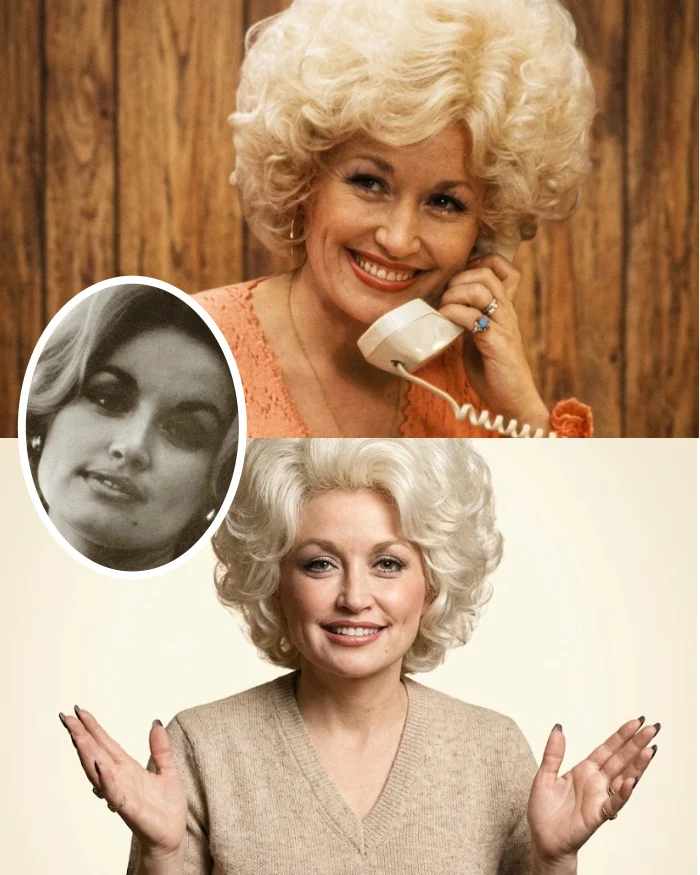
The most important instrument on one of the biggest songs of 1980 was not a drum or a piano. It was the sharp clicking of Dolly Parton acrylic nails, recorded at a studio microphone and later credited in the liner notes as Nails right beside guitars, keyboards, and brass.
When Parton walked into the studio that year to record the title track for her cinematic debut, she brought that unusual piece of percussion with her. She did not need a snare drum, a high hat, or a synthetic beat to capture the sound of the American office floor. She only needed her own fingernails.
The session for 9 to 5 marked a massive pivot in her career. She was moving beyond the familiar confines of Music Row in Nashville and onto a global Hollywood stage. Produced by Gregg Perry, the studio time was booked to anchor a 20th Century Fox comedy and a full length concept album titled 9 to 5 and Odd Jobs. Perry and Parton had to build a track rooted in country storytelling while carrying the urgent and driving tempo of the modern American workplace.
That tempo had been found weeks earlier on a California soundstage. Jane Fonda had recruited Parton to star with her and Lily Tomlin in a film about female secretaries turning the tables on their misogynistic boss. Parton accepted the role with one strict condition, that she would write the theme song.
Waiting in her wardrobe between takes, she watched the daily grind of the production crew and thought about the women she was representing on screen. With no guitar nearby, she began rubbing her long acrylic nails together. The sharp and staccato clicking perfectly mimicked the mechanical strike of a traditional typewriter, the defining machinery of the secretarial pool and a symbol of the rigid daily grind.
She took the hyper feminine image the industry expected her to maintain and used it as a literal instrument to make sure the world listened.
Bringing that improvised rhythm into the recording studio required a deliberate approach. The typewriter sound could easily have been recreated with a sound effect or a drum machine, but Parton insisted on using the original instrument. She stood at the microphone and meticulously recreated the friction of her acrylics while studio engineers positioned the mics to capture the exact frequency of the clicking and mixed it into the master track as the primary rhythmic spine of the song.
It was a brilliant piece of practical engineering. The organic sound was distinct, sharp, and unrelenting, and it anchored a complex arrangement of horns, rolling piano lines, and a driving bass groove that pushed the song far beyond traditional country boundaries. The resulting album carried that specific and entirely serious credit in its liner notes.
The session produced something much larger than a movie soundtrack. By blending the working class empathy of country music with a polished pop and rhythm and blues arrangement, 9 to 5 became a national anthem for millions of women. It delivered a fiercely critical story about corporate exploitation, unpaid overtime, and the exhaustion of punching the clock under male dominated management, all carried by an upbeat and irresistible hook.
The industry response validated every choice made in that studio. The track achieved a rare triple crown by hitting Number One on the Billboard Hot Country Singles chart, the Billboard Hot 100, and the Adult Contemporary chart. It earned two Grammy Awards and secured an Academy Award nomination for Best Original Song.
The 9 to 5 and Odd Jobs album expanded the thematic focus of the session with a collection of songs dedicated entirely to the struggles of working men and women. The title track remained the centerpiece and proved Parton had an unparalleled ability to bridge her distinct brand of femininity with razor sharp musical instincts. She had taken an item of everyday cosmetic maintenance that was often dismissed as purely superficial and turned it into the driving percussion behind a demand for equality.
Decades later, she would still happily demonstrate the technique on talk shows, clicking her nails together to recreate the famous beat for new generations of fans. The 1980 recording session remains a masterclass in songwriting and self awareness, showing exactly how her mind worked.