
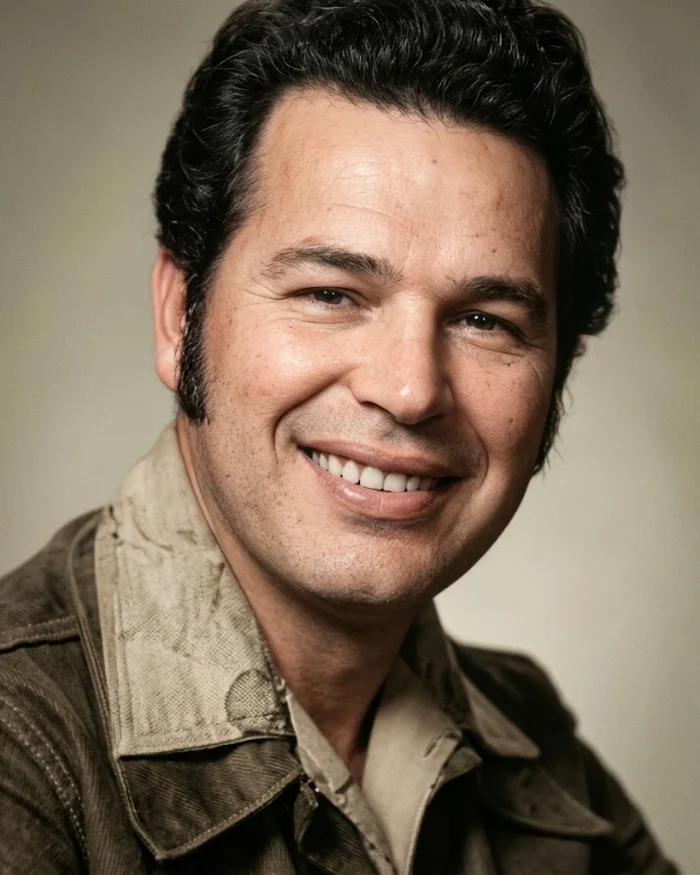
He kept his mechanic tools close even after signing with Capitol Records, because a guaranteed wage for fixing a dented fender felt safer than the fragile gamble of music. Gene Watson never trusted fame easily, and that caution was forged long before he ever saw a recording studio.
In 1957, fourteen year old Gene Watson walked out of a ninth grade classroom in Paris, Texas and never returned. At an age when most boys were focused on textbooks and teenage milestones and friendships, Watson was forced to confront a desperate and much heavier reality.
Born into extreme rural poverty, his family of nine, including his parents and six siblings, had survived by moving constantly across the South and living out of a retrofitted scrap metal school bus. The family was drowning while struggling daily to feed seven children, and seasonal farm labor was no longer enough. The crushing burden of survival left no room for a normal adolescence.
To keep his family from going hungry, the young teenager made a quiet and devastating choice to permanently abandon his education. He traded his school days for grueling manual labor, stepping into the harsh adult world of full time wage earning years before he was ready. He did not just give up a high school diploma. He sacrificed his own personal future so his parents and siblings could simply survive, and every long day of physical work and every meager paycheck earned by a boy who should have been in class was a testament to his profound and unspoken devotion to his blood.
The profound and world weary sorrow in his voice was never an act.
His early working years were defined by severe physical exertion. He initially took jobs in the agricultural fields and lumber yards of East Texas, trading his youth for meager paychecks just to ensure his family had enough food to endure the week. By the early 1960s, seeking a more stable income than unpredictable crop seasons could provide, Watson relocated to Houston.
He traded sun baked dirt for a sweltering garage, finding steady work as an auto body mechanic and painter. For years, his daily existence revolved around grinding metal, applying paint, and inhaling harsh chemical fumes in the shop. The work was exhausting, but it provided a guaranteed and steady wage his family had never possessed during their time as migrant workers.
To supplement his income from the body shop, Watson began singing at local Houston nightclubs in the evenings. He formed a band called Gene Watson and The Other Four, playing dimly lit honky tonks across the city, including a long term residency at the popular Dynasty Club.
For a young man who had been working since he was fourteen, music was not a glamorous pursuit of fame. It was simply a second job. He would finish a long shift at the garage, scrub the grease from his hands, and stand behind a microphone until the early hours of the morning just to earn a few extra dollars to support his own growing family.
But local crowds quickly recognized the young mechanic possessed a highly unusual instrument. When Watson delivered a traditional country ballad, the deep and resonant sorrow in his voice was entirely authentic. He was not a trained vocalist practicing a heartbreaking tone, he was simply channeling the heavy exhaustion of a life spent working. Every note carried lingering echoes of the boy who had sacrificed his future to carry his family survival on his shoulders.
His undeniable talent caught the attention of local music executives, leading to early independent singles and eventually a major label contract with Capitol Records. Yet even with that contract in hand, Watson remained deeply skeptical and famously held onto his mechanic tools, continuing to repair cars even as his early records started playing on the radio.
That hesitation finally dissolved in 1975 with the release of the steamy and atmospheric track Love in the Hot Afternoon. The song struck a massive nerve with the American public, rocketing to Number 3 on the Billboard country singles chart. At 31 years old, the man who had spent half his life in fields and garages suddenly possessed one of the biggest hits in the nation. He was finally forced to put down his sanding block and step onto the stage full time, building a legendary career with enduring classics like Paper Rosie and Farewell Party on his eventual path to Nashville recognition.
Despite decades of widespread acclaim and a permanent place in country music history, Watson never adopted the posturing of a celebrity. The man standing under the Grand Ole Opry lights possessed the exact same quiet endurance as the fourteen year old boy who walked out of that Paris, Texas classroom, proving his legendary voice was forged by poverty and relentless labor long before Nashville.