
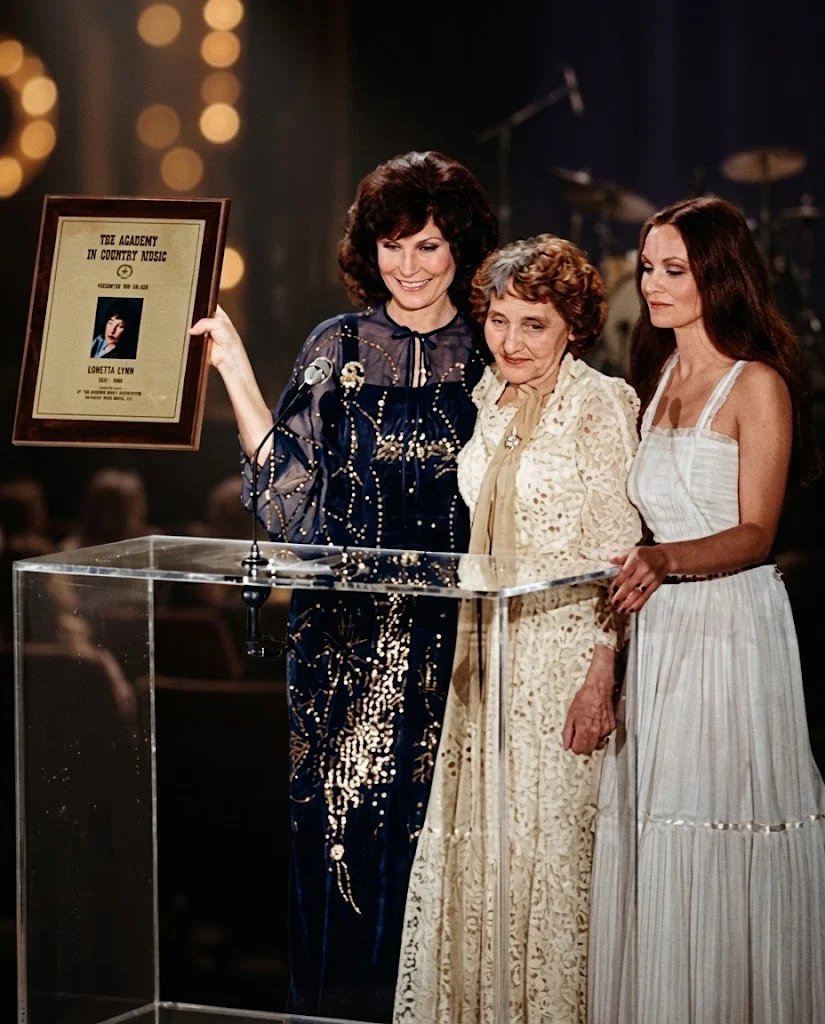
Long before Nashville, a young girl sat on a rickety porch in Butcher Holler, listening to her mother sing about the sinking of the Titanic. Clara Marie’s folk ballad was more than a song—it was the news of the world, a lifeline in the dark Appalachian mountains. That moment planted a seed in Loretta Lynn: survival was not hiding from tragedy, but telling it out loud.
When Loretta carried a guitar into the 1960s studios, she didn’t sing about distant ships. She sang about the shipwrecks in ordinary kitchens—the drinking, the fighting, the quiet desperation. While female artists were handed polished ballads by men, Loretta turned her notepad into a raw diary, writing “Don’t Come Home A-Drinkin'” and “Fist City” as blunt warnings from her own turbulent marriage to Doolittle Lynn.
Then she pushed further. “The Pill” and “Rated ‘X'” tackled birth control and divorce—topics so taboo that radio stations banned her. But censorship failed. The songs topped charts because they mirrored a reality executives ignored and everyday women lived.
The true weight of her music was never in the charts. It was backstage, where working-class housewives pulled her aside, tears streaming, whispering: “That is my life.”
Loretta didn’t hide her vulnerability; she wielded it, building a sisterhood with women told to stay quiet. Every stage light she stepped into carried Clara Marie’s legacy, transforming the daily struggles of ordinary women into American epics—and revealing the true cost of giving silenced voices a microphone.