
In the winter of 1970, Willie Nelson stood in the smoldering wreckage of his Ridgetop, Tennessee home, watching everything he owned turn to ash. But as the flames died down, something remarkable happened—he realized he was finally free.
The 37-year-old songwriter didn’t rush into the burning house to save gold records or expensive furniture. Instead, he braved the smoke to rescue just two items: a hidden stash of marijuana and his battered Martin N-20 acoustic guitar, famously known as Trigger. At the time, his personal life was already crumbling alongside the end of his second marriage to Shirley Collie. The fire didn’t destroy his life; it simply burned away the cage that had held his artistry captive for years.
“The ashes of Ridgetop did not destroy his career; they simply burned away the cage that had held his artistry captive for years.”
For years, Nelson had been suffocating under the heavy machinery of the ‘Nashville Sound.’ Despite writing massive hits for other artists—including Patsy Cline’s Crazy—his own recording career was stalled. Studio executives forced him into tailored suits, slicked-back hair, and rigid musical arrangements filled with string sections. The industry wanted a polished crooner, but Nelson was a restless poet.
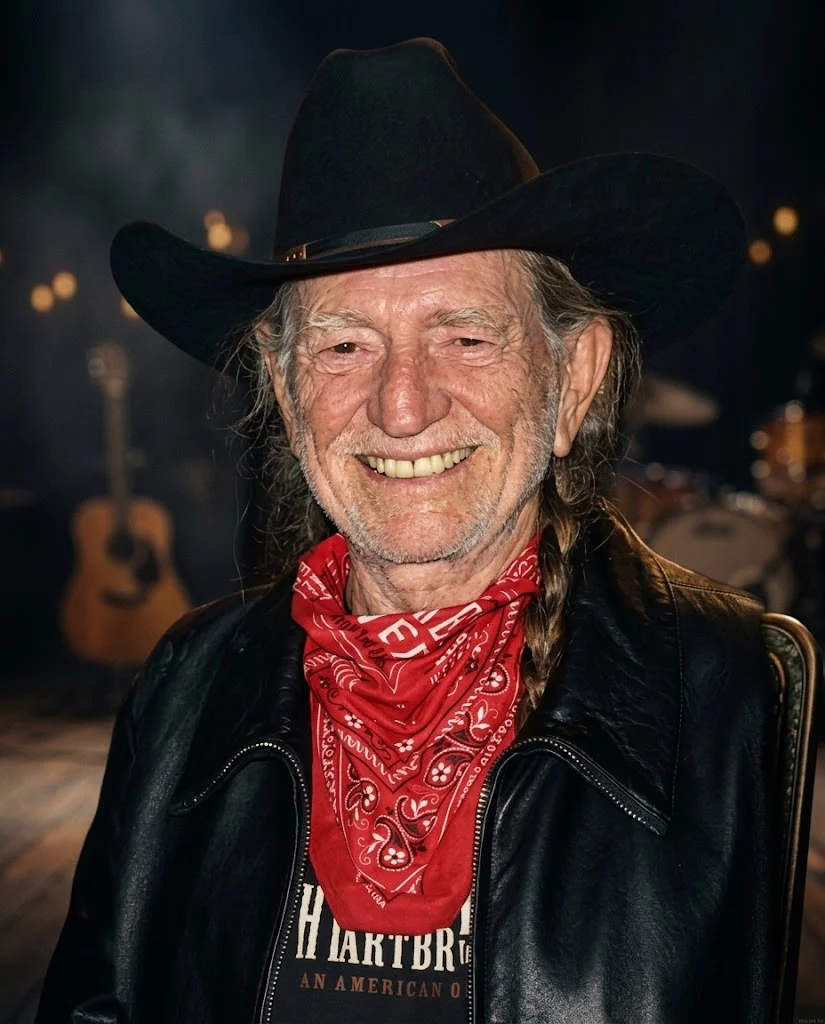
With nothing left to lose, he packed up his surviving possessions and moved back home to Texas. Settling in Austin, a rising cultural melting pot, Nelson completely discarded the clean-cut industry mold. He let his hair grow into his now-iconic braids, traded the restrictive suits for faded denim and a bandana, and started playing venues like the Armadillo World Headquarters.
His raw, unfiltered, acoustic-driven music did the impossible: it united fiercely conservative Texas cowboys and long-haired, anti-establishment hippies under one roof. They drank beer and listened to the same songs, bridged entirely by the honesty of the man on the stage. This underground movement, soon branded as Outlaw Country, proved there was a massive, untapped audience hungry for the exact music Nashville’s polished assembly line was actively ignoring.
That grassroots Texas success gave Nelson the one thing he had never had in Tennessee: leverage. When he negotiated a new contract with Columbia Records in 1975, he forced the traditional country music industry to completely rewrite its rules. He demanded, and historically won, absolute creative control over his music. He took his own touring band into a cheap Texas studio and recorded the sparse, acoustic Red Headed Stranger. When Nashville executives heard the bare tracks, they thought it was an unfinished demo and begged him to add strings. Backed by his unprecedented contract, Nelson refused. The album was released exactly as he intended, becoming a multi-platinum masterpiece and permanently shattering the old studio system.
The turning point of his entire existence traces directly back to those ashes in Ridgetop. By saving Trigger from the flames, he held onto the only weapon he needed to rebuild his legacy on his own terms. Today, that same piece of wood is worn completely through, bearing a gaping hole from decades of relentless strumming. It is scarred, battered, and entirely unique—a perfect reflection of the man who plays it.
Nashville tried to build a star by telling him exactly who to be. It took losing everything for Willie Nelson to show them who he actually was.