
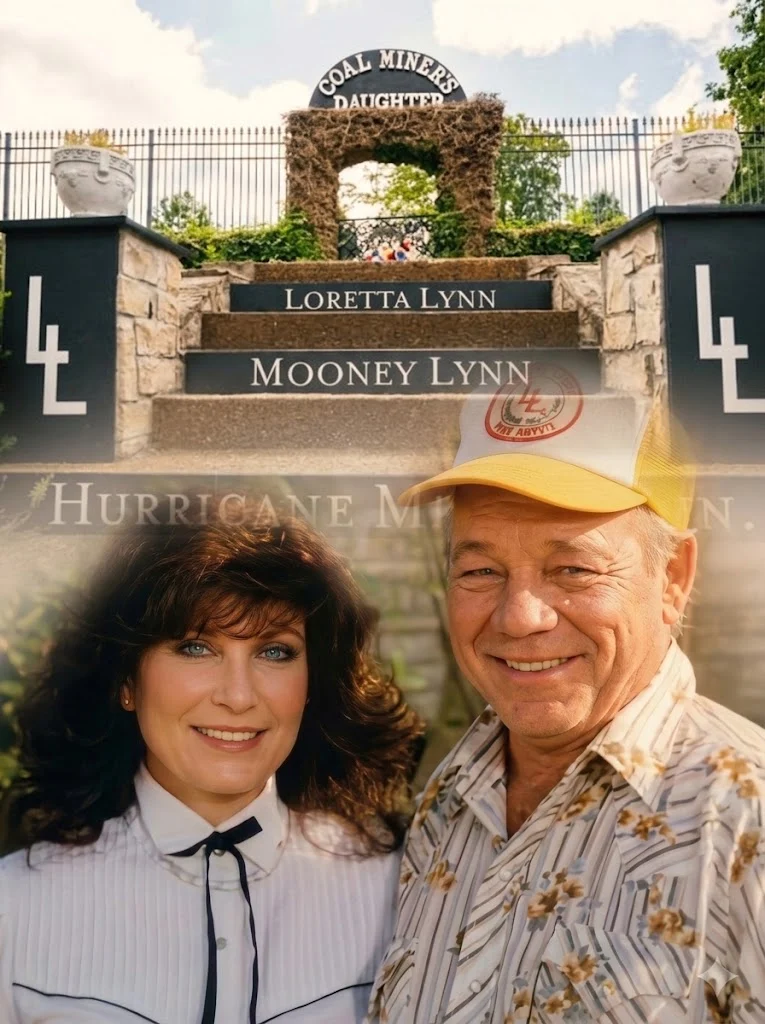
A humble seventeen-dollar guitar sparked an acoustic revolution in the Appalachian mountains, but it was the deep, unrelenting heartache of a forty-eight-year marriage that ultimately forged the soul of country music.
Long before gold records lined her walls and the title of Coal Miner’s Daughter defined her legacy, Loretta Lynn was simply a young mother quietly raising four children before her twentieth birthday. Her husband, Oliver Doolittle Lynn, recognized a raw, untamed magic in her voice. He purchased a modest Harmony guitar, nudged her onto a local stage, and forced her to confront the staggering shyness that held her back. By 1960, he stepped into the role of her manager, steering them through a grueling three-month cross-country journey inside a tired 1955 Ford. They survived on bologna sandwiches and slept in the backseat while personally knocking on the doors of minor radio stations to pitch her debut single, I’m a Honky Tonk Girl.
Yet, the very man who laid the cornerstone of her career simultaneously became the source of her deepest personal anguish. As her star climbed, their private life buckled under his severe struggles with alcoholism and recurring infidelities. In an era when Nashville demanded that female stars mask their marital discord behind pristine smiles and fabricated heartbreak, Loretta forged an entirely rebellious path.
She refused to hide behind illusions, instead dragging the raw reality of her home life straight into the recording studio.
Rather than silencing the turmoil, she channeled her bitter betrayals into sessions with producer Owen Bradley. Stepping up to the Decca Records microphone meant transforming actual kitchen confrontations into art. The sharp warnings Doolittle heard when staggering home late and the fierce anger toward his mistresses were scribbled onto scraps of paper and sung with defiant clarity. The vocal booth became her arena of reclamation, giving birth to unapologetic chart-dominating anthems like Don’t Come Home A-Drinkin’ and Fist City.
Even when conservative radio programmers resisted the stark honesty of her lyrics and banned her tracks for pushing boundaries, everyday working women flooded record shops. Loretta proved that female reality, complete with deep emotional scars, resonated deeply with the public. Those tracks served as an open, public conversation with the partner she steadfastly refused to abandon, validating millions of rural wives experiencing identical silent struggles.
When severe diabetes and heart failure ravaged Doolittle in his declining years, the monumental superstar willingly stepped away from touring. She dedicated her life to nursing him at home until his passing in 1996, keeping his personal quarters untouched for decades afterward. Resting now side by side at their Tennessee estate, their final resting place immortalizes the ultimate grace of a profoundly complex bond that shaped American music forever.