
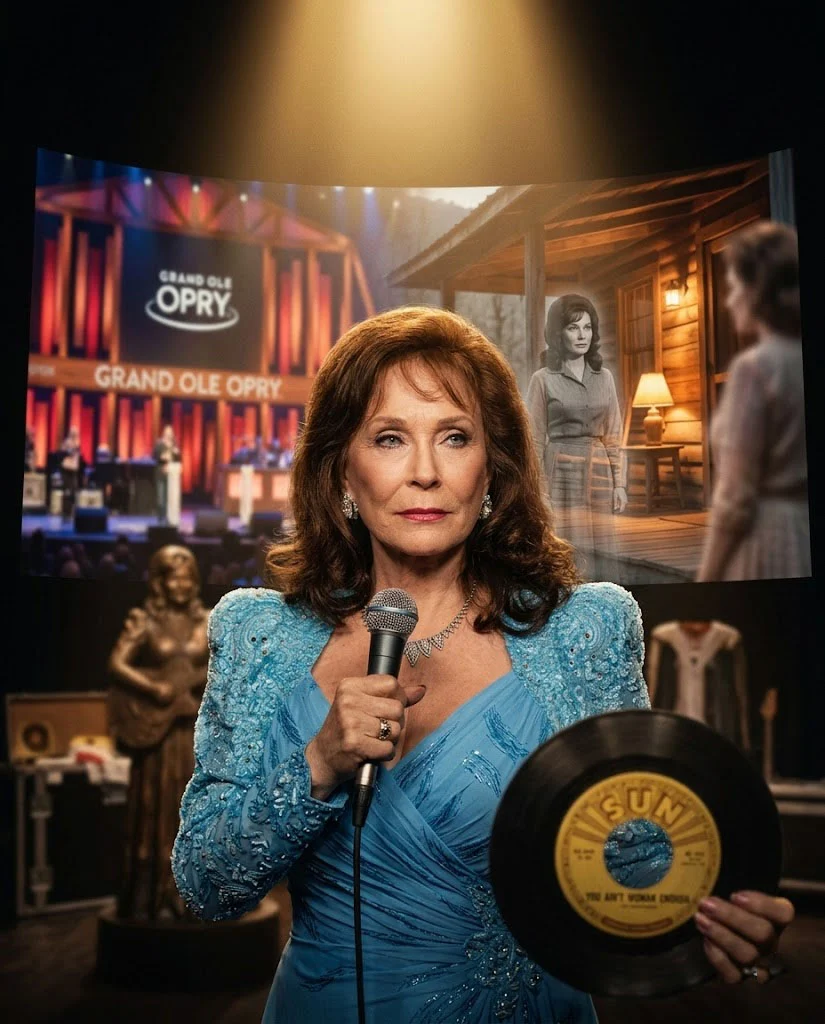
In the spring of 1966, Loretta Lynn stepped to a Nashville microphone and made country heartbreak sound less like weeping and more like a warning shot from the front porch.
She was recording You Ain’t Woman Enough, and the song did not fit the polite Nashville script. It was not a ballad about a wife collapsing after the damage was done. It was a live confrontation with the other woman before the damage could begin.
By the mid 1960s, the Nashville machine knew exactly how to sell polished sorrow. Female characters were often written as passive victims, alone in dark rooms, crying over men who had wandered too far. The industry wanted women to sound wounded and dependent. Sorrow was supposed to stay quiet.
Loretta did not arrive with that manufactured delicacy. She carried the fire of a Kentucky mountain girl who had worked, loved, and raised a house full of babies. Real life followed her into the studio, and she did not ask permission to speak plainly.
When she cut the track, she shattered the old script. There were no tears on the hardwood floor and no dignified surrender to fate. Instead the song felt like a woman stepping onto her wooden porch in the fading afternoon light. She looked her rival in the eye and spoke with a calm that was almost frightening. The wandering man was no longer the center of the story.
The real tension was between two women standing face to face in the dirt. Loretta gave the loyal wife every ounce of power in the room. She did not beg. She warned the other woman that taking her husband would be a brutal and impossible fight.
Loretta Lynn made heartbreak sound like you had better think twice before walking up her driveway
A lesser singer might have turned the plainspoken lyrics into bitterness or chaos. Loretta found the sharp line between dark southern humor and unbreakable steel. She sounded wounded, but she never sounded broken.
She understood that female jealousy was not always weakness. Sometimes it was pride. Sometimes it was a tired woman protecting the difficult life she had built with her own hands. She gave rural women a voice that did not make them feel ashamed of their anger. She let them stand straight in their own kitchens.
In the end, the record was never just a catchy radio song about a rivalry over a foolish man. It was a boundary line drawn in the gravel. It was the sound of a woman who knew her worth long before the world told her to claim it.
Other singers could make domestic heartbreak sound pretty and polite. They could turn loneliness into a gentle tragedy. Loretta Lynn made heartbreak sound like a front porch warning.