
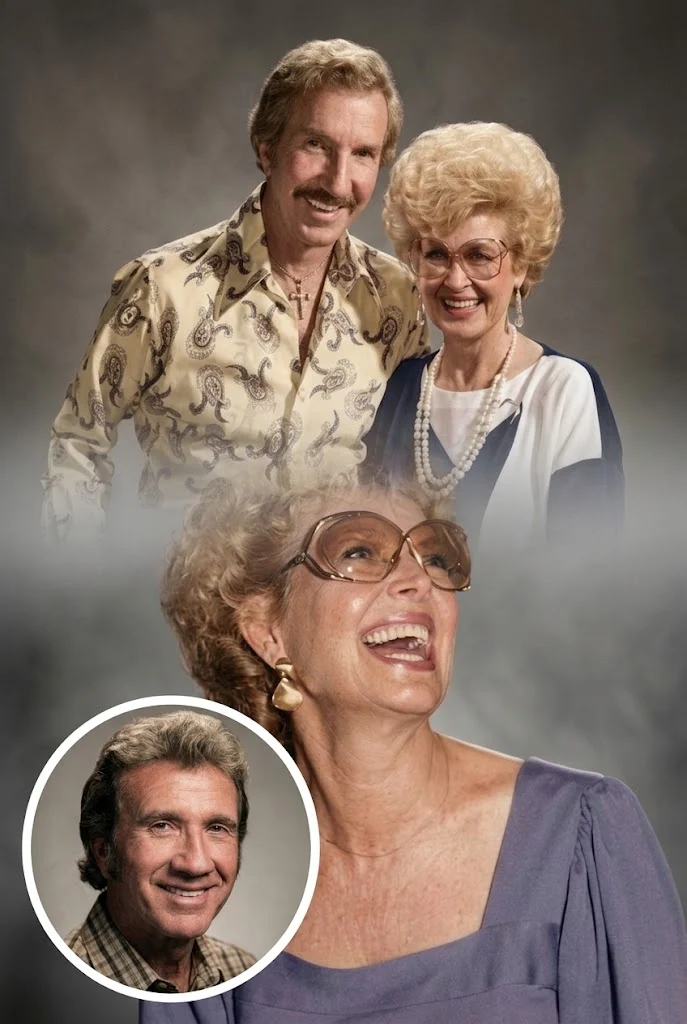
He packed national arenas for three decades, but the decision to walk away the moment the lights faded defined his entire life.
Marty Robbins packed arenas and shaped country radio across three decades, yet his most enduring decision was walking away from the spotlight the moment the music stopped. Marty Robbins stood among the most electrifying performers of the golden era of country music, captivating audiences across three decades with his versatile voice, storytelling craft, and unmistakable stage charisma. Yet for all the acclaim that followed him across the United States, his most deliberate choice was drawing an unyielding line between the public figure under the spotlight and the private man who went home when the music stopped.
During the golden era of Nashville between the 1950s and 1970s, the country music scene was defined by backstage parties, rigorous touring schedules, and high profile divorces. During the 1950s, 1960s, and 1970s, the Nashville music industry was renowned for demanding touring schedules, late night socializing, and the turbulent personal lives that frequently accompanied sudden stardom. Robbins, with his smooth voice and magnetic stage presence, drew massive crowds at the Grand Ole Opry and sold out halls nationwide. Robbins, who scored sixteen Number One hits and became a fixture on the Grand Ole Opry, faced the same grueling environment. Thousands of fan letters arrived after every tour, bringing all the temptations common to industry fame. Thousands of admirers filled concert halls, and relentless industry expectations followed every major release.
Robbins met that reality with an unyielding boundary. Instead of immersing himself in the bustling social scene of Music City, Robbins established a firm boundary early in his career. While his peers lingered at afterparties, he routinely packed his gear and headed straight home to his family farm. When his performances concluded, he routinely packed his equipment and headed straight back to his family farm rather than lingering at backstage gatherings. That quiet discipline allowed him to protect a domestic sanctuary that remained entirely free of controversy or public drama throughout his life.
At the center of that sanctuary was his marriage to Marizona Baldwin, whom he wed in 1948 after returning from naval service in the Pacific during World War II. Through thirty four years of marriage, his private life with his wife, Marizona Baldwin, remained completely untouched by scandal or tabloid headlines. Together, they navigated the intense pressures of a high profile music career by keeping their household intentionally separate from the entertainment business. While Robbins handled the demands of touring, recording, and television appearances, Marizona deliberately stayed out of the media spotlight, managing their home and raising their two children, Ronny and Janet, in an atmosphere of stability. Marizona avoided the press, choosing instead to offer the quiet support that grounded Robbins whenever the noise of the business grew overwhelming.
That private stability served as an essential counterbalance to his restless creative drive. Behind the scenes, Robbins maintained a demanding lifestyle that extended beyond recording studios to competitive stock car racing on the NASCAR circuit. Marizona understood his need for motion, offering a steady and quiet reassurance that gave him a dependable anchor whenever the physical and emotional exhaustion of his schedule mounted.
When severe cardiovascular illness struck in 1969, leading to groundbreaking triple bypass heart surgery, that domestic foundation proved vital. While industry observers wondered if his career had reached an abrupt end, Robbins recovered under the dedicated care of his wife, eventually returning to the stage with renewed energy. Through further health complications in the late 1970s and early 1980s, their home remained a calm haven shielded from the pressures of the road.
Robbins earned two Grammy Awards, achieved crossover success on pop and country charts with historic ballads, and was formally inducted into the Country Music Hall of Fame in October 1982, just weeks before his passing at age fifty seven.
The spotlight gave him an enduring legacy, but the quiet farm he returned to each night was where he lived his real life.
For Robbins, stepping off the stage meant leaving the persona behind and returning to the quiet kitchen table where his real life lived. How the couple quietly navigated the demanding Nashville machine and preserved their private sanctuary over those thirty four years remains one of the most remarkable chapters of his personal history. The songs he left behind continue to celebrate wandering drifters, daring gunfighters, and fleeting moments on the western range. Yet Marty Robbins understood that the applause of thousands was fleeting compared to the steady devotion of a thirty four year marriage. The spotlight gave him an enduring legacy, but the quiet farm he returned to each night was where he lived his real life.