
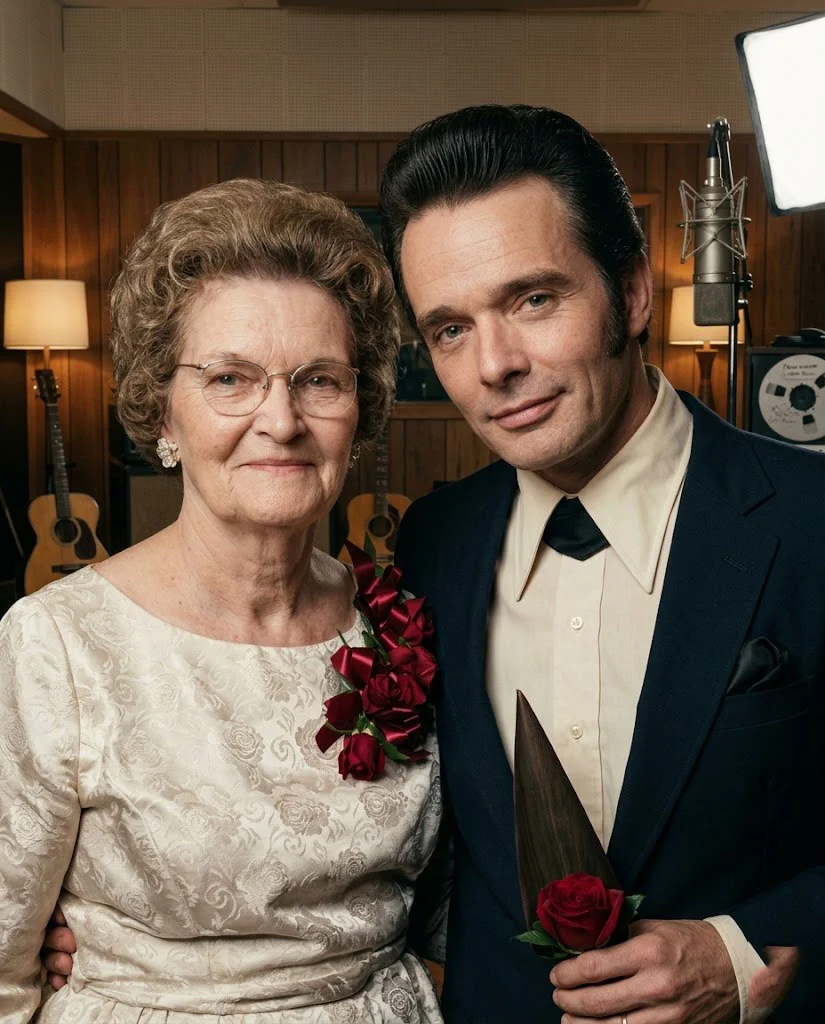
Some songs are written to climb the charts, while others are carved straight out of a man’s deepest guilt.
By 1968, Merle Haggard was a fixture on American radios, his voice echoing from dance halls and truck stops. The boy from Oildale had clawed his way out of San Quentin, turning hard scars into trusted country gold. Yet behind every note of Mama Tried lay a much heavier shadow, anchored entirely by his mother, Flossie Mae Haggard.
When Merle was only nine years old, his father passed away, leaving Flossie to piece together a broken household while her young son spiraled into rebellion and sorrow. That early grief birthed a song that carried the weight of remorse rather than pride. Audiences embraced it as a classic outlaw anthem, missing the quiet confession hidden in plain sight. It was not a tale of defiance, but a grown man acknowledging the endless patience of the woman who refused to let him go.
A dear old mother tried… Not perfectly. Not magically. Just faithfully. And Merle knew that mattered more than any illusion of perfection.
While the lyric about facing life without parole in prison was poetic license rather than strict fact, the emotional reality cut much deeper than court documents ever could. The true prison was the lingering shame of knowing he had broken his mother’s heart. He sang not as a proud rebel, but as someone finally mature enough to face the wreckage of his youth.
Flossie had endured the arrests, the fear, and the reckless years without ever withdrawing her fierce devotion. Decades later, as the record cemented its legacy, fame had carried Merle far beyond his troubled past. Yet he never outgrew the debt he owed to the mother who waited and forgave.
Not a performance. An apology. The kind a son carries silently for years until he finally finds the courage to speak the truth aloud.
Ultimately, Mama Tried endures because it strips away the tough exterior of outlaw culture to reveal something raw and universally human. It remains a timeless reminder of a son turning back toward the one who loved him through his darkest hours, offering a confession of grace and survival.