
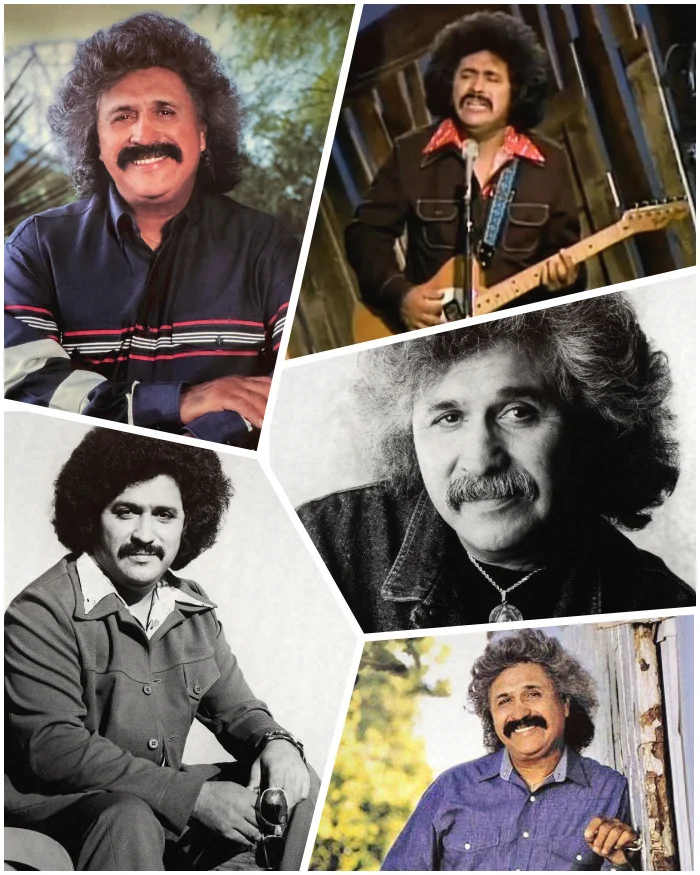
On a sweltering August day in 1985, the voice that had serenaded millions was silent—drowned out by years of alcohol and drugs. But just as Freddy Fender’s star was fading into darkness, his wife Vangie Huerta refused to let it die. She gathered the family, staged an intervention, and walked him into a treatment facility on August 26, 1985, igniting a 21-year sobriety that would redefine his legacy.
Born Baldemar Huerta in San Benito, Texas, Fender had soared to the top of country and pop charts in the mid-1970s. Yet the relentless grind of touring and escalating substance dependence had hollowed out his fortune, his health, and the golden voice that made him famous. By the mid-1980s, the man who once commanded stadiums was barely holding on.
Vangie had known him long before the spotlight. They married young, divorced during turbulent years, and remarried. When his addiction spiraled in the mid-1980s, she didn’t walk away—she rallied the family and insisted he seek help. Fender accepted, checking into treatment on that fateful August day.
But recovery wasn’t a fairy tale. In a 2002 interview, after nearly 17 straight years clean, Fender was candid: his physical healing was slow, and his body and mind needed years to regain strength. He never claimed to be a self-made hero. Instead, he credited his survival to Vangie and to the humbling decision to accept help when he could no longer save himself.
That daily sobriety unlocked a stunning second act. In 1988, Robert Redford cast him as Mayor Sammy Cantu in The Milagro Beanfield War, returning Fender to national prominence. A year later, he joined Texas music legends Flaco Jiménez, Augie Meyers, and Doug Sahm to form the Texas Tornados—a Grammy-winning fusion of conjunto, country, rock, and border sounds. The group’s 1991 hit “(Hey Baby) Que Paso” earned a Grammy, and Fender later won more with Los Super Seven and his solo bolero collection La Música de Baldemar Huerta.
Still, the past took its toll. Diabetes and years of abuse led to hepatitis C, a kidney transplant from his daughter Marla in 2002, a liver transplant in 2004, and ultimately lung cancer that claimed his life on October 14, 2006. Yet through it all, he never touched alcohol or drugs again.
From that August afternoon in 1985 until his final days at home in Corpus Christi, Baldemar Huerta stayed clean—guided by the wife who refused to let him fall.