
There was no dramatic boardroom meeting. No formal declaration of independence. The turning point in the history of country music happened in a quiet, tense moment when a desperate musician laid a pistol on a studio console. It was the ultimate act of defiance, a silent standoff that would echo through the decades.
In the early 1970s, the Nashville Sound was a well-oiled machine. Producers held absolute power, dictating every song, arrangement, and session player for the artists on their roster. Waylon Jennings felt his music being systematically sanded down into something he no longer recognized. When RCA assigned him to producer Danny Davis—a man known for his rigid, top-down approach—the long-simmering tension finally broke.
The breaking point did not happen in a boardroom. During a suffocating recording session, pushed to the edge by Davis’s constant dictation, Waylon pulled a pistol and laid it on the studio console. No shots were fired, but the dead silence that followed carried more weight than any bullet. The weapon was not aimed at a person; it was aimed directly at a relentless machine that was trying to suffocate his soul.
Waylon was not trying to play the character of an outlaw for record sales. He was simply a man who would rather throw away a rising career than sing a polished track that did not belong to him. He was fighting for the right to keep the raw, unpolished edges of his own voice.
That silent standoff ultimately shattered the boundaries of Nashville’s control, forcing RCA Records to hand him full artistic freedom in 1972. The victory came with a heavy, specific cost. To secure total creative control—the right to choose his own producers, record in independent studios, and use his own road band instead of label-appointed session players—Jennings had to surrender RCA’s traditional financial safety net. He agreed to absorb his own recording costs directly out of his advances. If his unpolished, heavy-bass sound failed to sell, he would carry the financial ruin alone.
He took the risk. Jennings immediately walked away from the pristine, label-controlled rooms and began working in independent spaces like Hillbilly Central in Nashville. Surrounded by his own band, he finally captured the gritty, thumping rhythm he had been fighting for. The resulting music, including landmark albums like Lonesome, On’ry and Mean and Honky Tonk Heroes, defied every established rule of the industry.
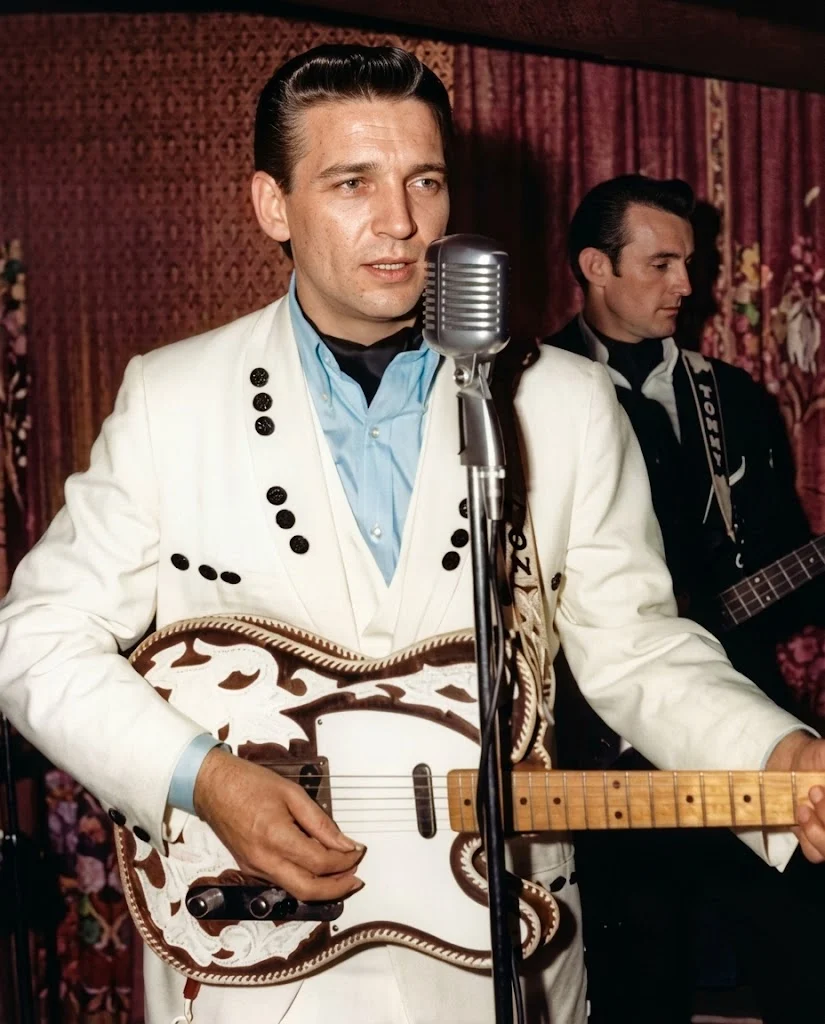
It officially launched the Outlaw Country movement. The polished strings were replaced by biting Telecasters. The formal studio musicians were replaced by road-worn players who understood the groove Jennings heard in his head.
Soon, other artists like Willie Nelson followed his lead, demanding their own creative autonomy and proving that country music did not have to be manufactured to reach a massive audience.
Waylon Jennings never set out to start a revolution. He just wanted to sound like himself.