
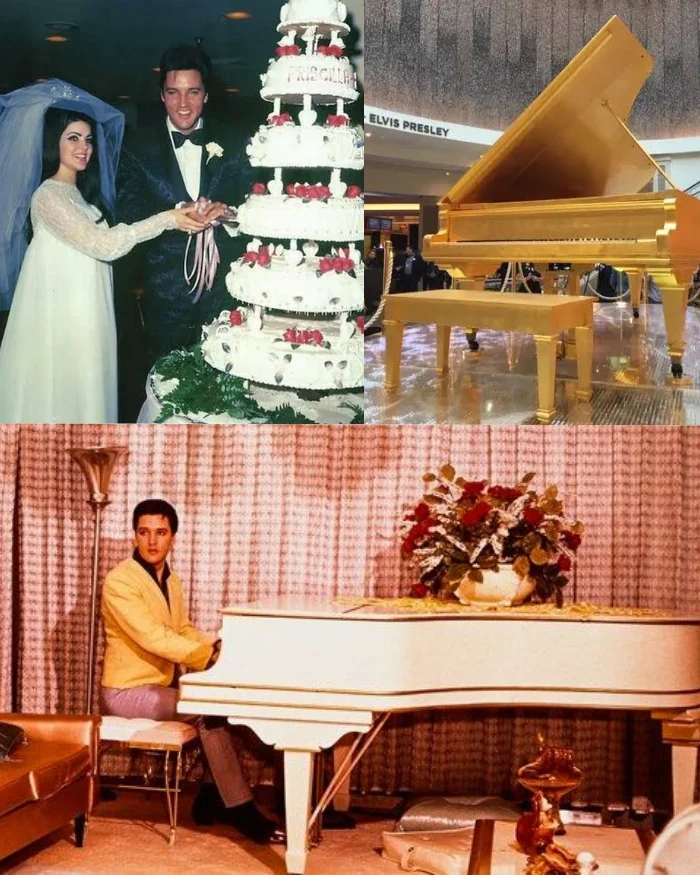
Deep within Graceland’s famous Music Room sits a breathtaking 24-karat gold grand piano, drawing admiring gazes from thousands of visitors every single year. Yet beneath its radiant, gilded surface lies a deeply touching history that began long before the fame, built entirely on a son’s quiet devotion to his mother.
When Elvis Presley first acquired the historic Memphis estate in the spring of 1957, one of his earliest and most meaningful gestures was securing a simple white Knabe and Company baby grand piano. It was never intended to impress the press or entertain dignitaries. Instead, it was placed there specifically for his mother, Gladys Presley, so she could spend her afternoons playing the cherished southern gospel hymns of her youth.
Far away from the deafening screams of adoring fans and the crushing pressures of worldwide stardom, Elvis found his ultimate sanctuary right beside those keys. Late into the night, he would often gather with members of his backing group, The Jordanaires, harmonizing through timeless spirituals until dawn broke. But that peaceful sanctuary shattered when Gladys passed away suddenly in August of 1958 at just forty-six years of age, leaving the piano largely silent and heavy with sorrow.
For Elvis, those informal sessions were a sanctuary
A full decade later, as Elvis and Priscilla prepared to celebrate their first wedding anniversary on May first of 1968, Priscilla wanted to offer a gift of profound emotional weight rather than extravagant commercial display. Remembering how deeply her husband cherished that worn white instrument, she secretly arranged for master craftsmen to perform a breathtaking transformation.
Over the course of several intensive weeks, artisans meticulously applied delicate sheets of genuine 24-karat gold leaf by hand to every curve, leg, and pedal lyre of the instrument. When the newly gilded masterpiece was slipped quietly back into the Music Room just in time for their anniversary morning, Elvis instantly recognized the heart beneath the gold.
Even years later, staff members and close friends frequently recalled hearing slow, melancholic gospel chords drifting through the dimly lit hallways of the mansion at two or three in the morning, long after the iron gates had locked for the night.
Following the tragic passing of Elvis in August of 1977, the golden instrument embarked on a lengthy absence from its home, spending over a decade on public exhibition at the Country Music Hall of Fame and Museum in Nashville behind velvet ropes. Eventually, the Presley estate successfully negotiated its triumphant return to Memphis, carefully placing the gilded artifact back onto the exact hardwood floor where it all began.
Today, the radiant gold finish preserves the instrument, but the wooden frame beneath still carries the memory of the woman who first heard its music