
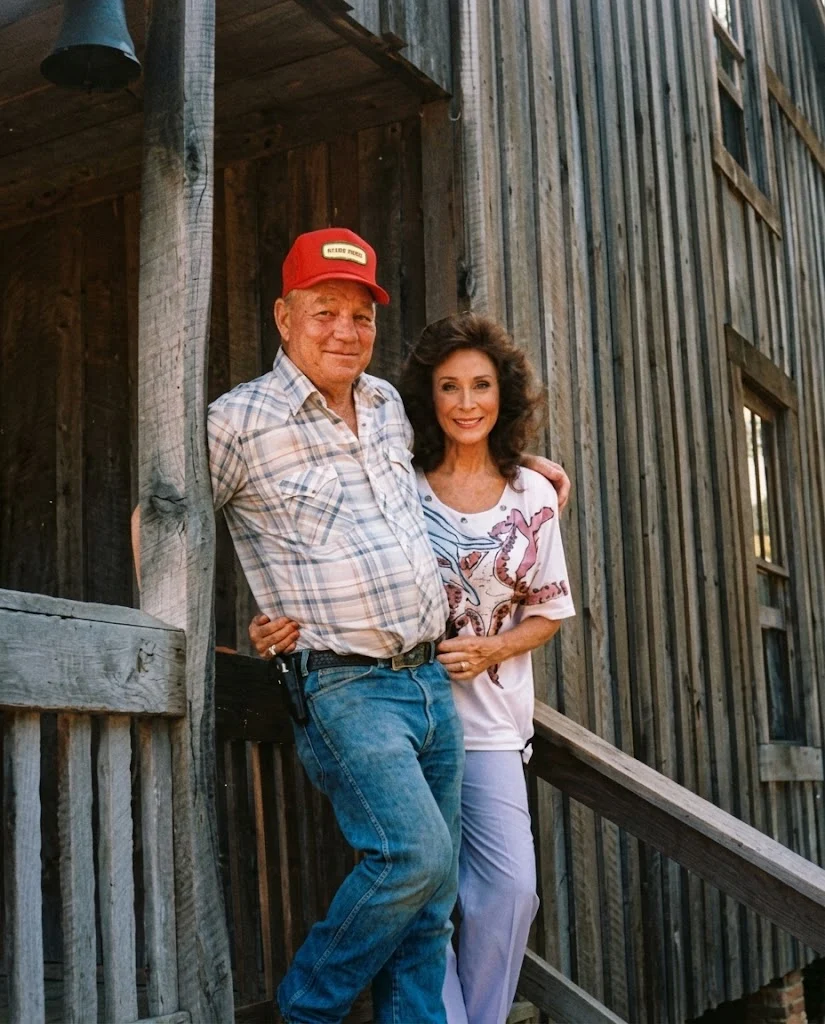
In the late summer of 1996, Oliver “Doolittle” Lynn passed away at the age of 69, quietly concluding a 48-year marriage that had been as turbulent as it was enduring. His death wasn’t just a loss—it was a seismic shift that left Loretta Lynn, the Queen of Country Music, completely unmoored.
For four years prior, Loretta had stepped away from the spotlight and the roar of sold-out arenas to become a full-time caregiver for her husband. She stayed by his side through heart surgery, diabetes complications, and a double amputation. The hospital beds, the daily medical routines, and the constant vigilance had become the very structure of her life.
When his battle finally ended, the sudden absence of those routines left a void she was unprepared to fill. The sprawling estate at Hurricane Mills—the monument to their shared triumphs and struggles—became unbearable. Every room echoed with his absence and the lingering trauma of his decline. Unable to face the weight of the empty house, she packed her things and fled to a house in Nashville, seeking a space unfamiliar enough to hide from the memories.
In that isolation, the powerful woman who had spent decades writing fearless, unapologetic anthems about her husband’s flaws fell into a deep emotional fog. The grief stripped away the country music icon, leaving only a widow trying to understand who she was without the domineering figure who had anchored her entire adult life.
For a long time, the guitars remained in their cases. But navigating her way out of that Nashville isolation eventually required a slow, deliberate surrender back to the one thing Doolittle had always pushed her to do. Her return to the recording studio was not an overnight triumph, but a gradual process steadily encouraged by her children and her own enduring instinct to write through the pain. When she finally stepped back behind a microphone to craft the music that would become her 2000 return album, Still Country, she was no longer running from the memories. She used the recording sessions to confront the profound quiet he left behind, turning the deepest loss of her life into a quiet testament of survival.
The irony of her grief was rooted in the very foundation of her career. Loretta had built her groundbreaking legacy by documenting the fractures of their relationship for the entire world to hear. Yet, when the ultimate line between sickness and health was drawn, she had chosen a staggering level of forgiveness. Caring for the fragile man who had both hurt her and built her career became the very thing that kept her grounded. Without him to care for, she had to rebuild her strength from the ground up, realizing that the voice he had discovered decades ago was the only tool she had left to carry on.
The house at Hurricane Mills eventually welcomed her back, and the stages opened up once more. She did not just survive the silence; she proved that the music he had pushed her to sing would be the very thing that carried her through his absence.