
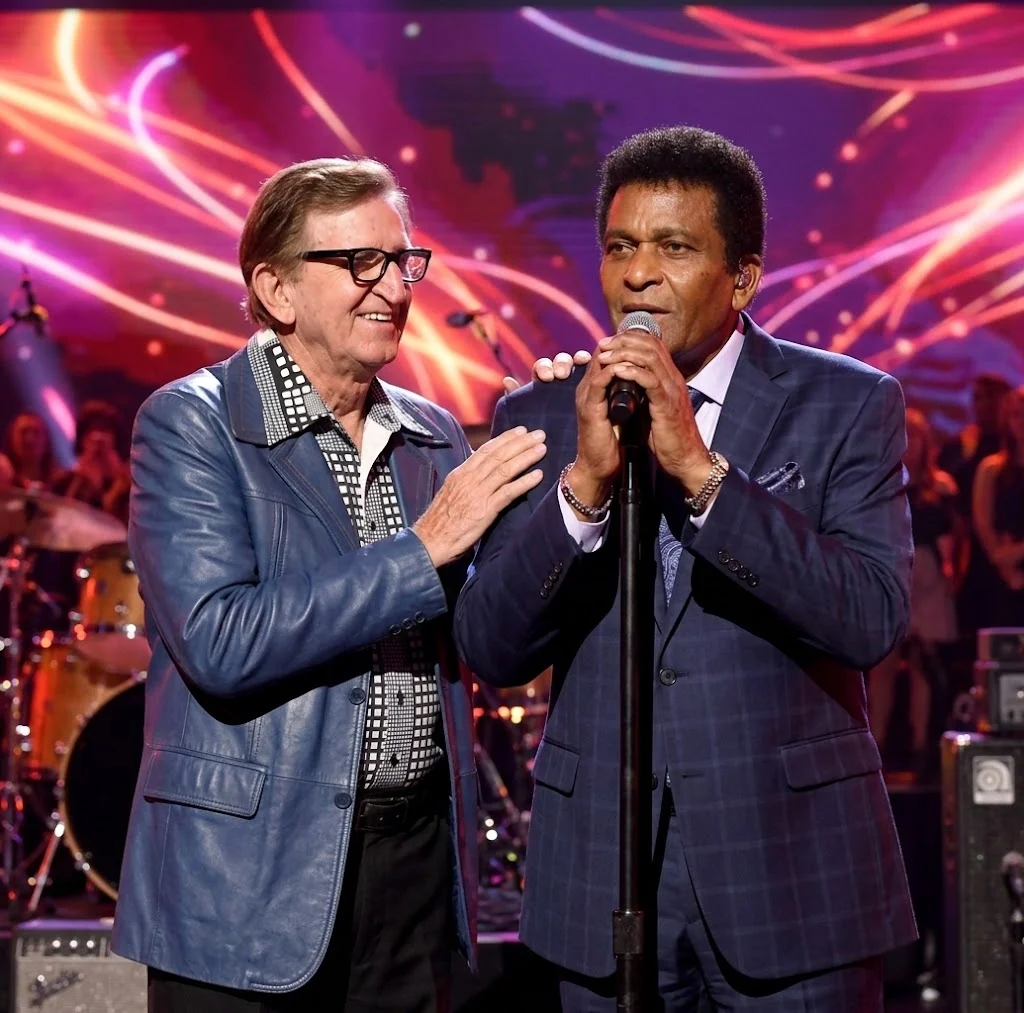
In the smoky haze of a Montana copper smelter, a young Black man named Charley Pride toiled away, dreaming of a life beyond the furnaces. He held onto a fading hope of playing Major League Baseball, but the physical grind of the industry was taking its toll. Then, a single invitation changed everything.
During a 1962 tour stop in Helena, Montana, country star Red Sovine heard Pride sing one song on a local stage. The track was “Heartaches by the Number,” and it wasn’t just a performance—it was a revelation. Sovine didn’t hear a novelty or a risk; he heard the pure, undeniable truth of a country baritone that belonged on the radio.
In an era of deep segregation, a Black man stepping into the country music industry seemed nearly impossible. Yet, Sovine’s reaction was based entirely on the music. True talent carried no color. Trusting that single validation, Pride walked away from baseball, borrowed money, and carried the future of his young family on a leap of faith to Nashville in 1963.
Armed with Sovine’s industry connections, Pride found his way to producer Chet Atkins and RCA Victor. Knowing the rigid prejudices of Southern radio programmers, the label sent his first singles out in 1965 without a publicity photograph. They let his voice do the work of breaking the barrier.
Charley Pride proved that a country song only answers to the truth of the person singing it. He changed the industry simply by refusing to be anyone but himself—but the intense RCA recording sessions, and how those early faceless records slowly won over a skeptical nation, reveal the exact steps of how that history was built.