
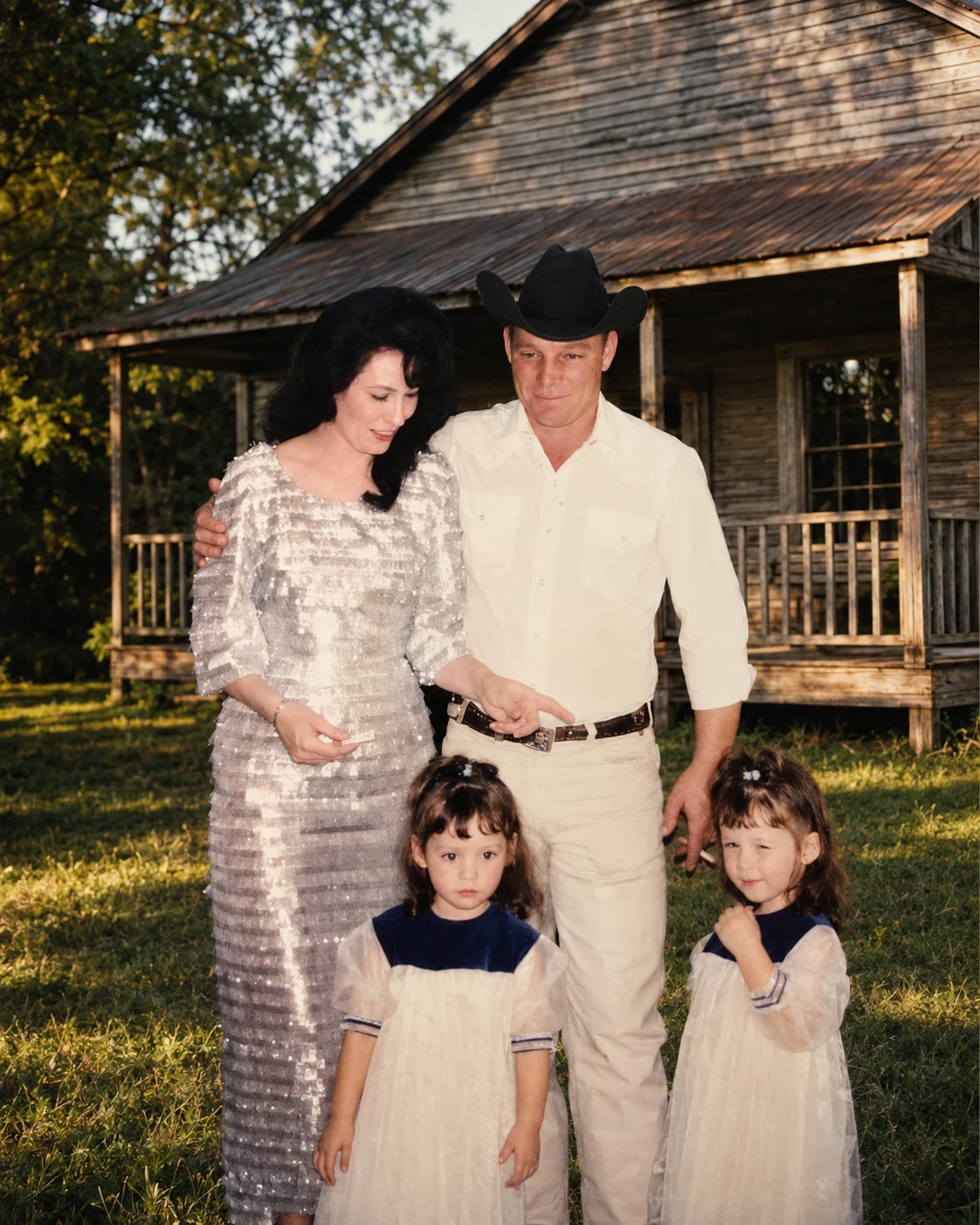
From a tense moment of public confrontation to a chart-topping anthem, Loretta Lynn built a legendary career by refusing to hide the raw, unfiltered realities of her turbulent marriage.
By 1968, the marriage between country icon Loretta Lynn and Oliver Doolittle Lynn was already an open secret of public friction, loud arguments, and fierce resilience. Rather than masking her household struggles behind a polite fairy tale facade, Loretta transformed those rural tensions straight into her music. Her most powerful songwriting material was born right out of daily friction.
The catalyst for one of her defining tracks did not strike during a quiet, reflective writing session. It erupted live on stage. While performing in front of a crowded room, Loretta spotted a woman in the audience making overt eyes at Doo, crossing a boundary the singer refused to tolerate.
While many performers would have ignored the distraction until the end of the night, Loretta took matters into her own hands instantly. She delivered a sharp, public warning directly from the stage, letting the admirer know that continuing to flirt would result in a mouthful of knuckles. That raw anger did not stay at the venue. Loretta carried the confrontation home, channeling her genuine physical threat into the fierce anthem Fist City.
She was defending her deeply flawed, complicated marriage, and she was doing it without asking for anyone’s permission.
When January 1968 arrived, Loretta brought that exact same fire directly into Bradley’s Barn studio in Mount Juliet, Tennessee. Teaming up with producer Owen Bradley, she resisted any industry pressure to soften the edges or polish away her Kentucky grit. Bradley wisely let her natural power shine, allowing her to channel authentic adrenaline straight into the microphone over traditional country rhythms.
By April, the single climbed to the summit of the Billboard country chart. The track triumphed commercially because it completely discarded radio politeness, speaking directly to working-class women who understood the fierce pride of guarding their own homes. Doo might have been the source of her hardest days, but he was also the one who bought her first guitar and pushed her onto a stage. Their relationship was a battleground, but it was exclusively her battleground, and she proved she would never back down.