
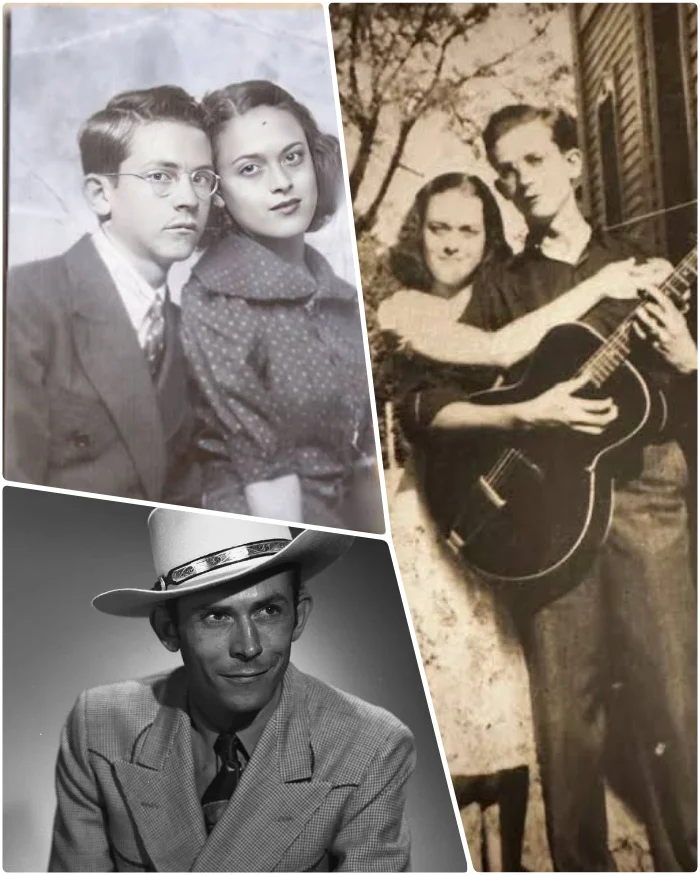
When Hank Williams died at 29 in early 1953, the world mourned a country music legend. But for his older sister Irene Williams Smith, the grief was personal—and the tabloids were getting it all wrong. Two years later, in March 1955, she picked up a pen and began writing Hank’s Corner for Country Song Roundup, determined to replace the sensational headlines with the truth she knew.
Her mission began after the funeral in Montgomery, Alabama, where reporters and opportunists focused only on his drinking, his turbulent marriages, and his sudden end. While others fought over royalties and estates, Irene chose a different path: she would tell the story of the brother who sold peanuts beside her during the Great Depression.
“I knew Hank before the fame, before the pain, and before the headlines. I knew the boy who learned guitar chords from a street musician in exchange for our mother’s cooking.”
Born on August 8, 1922, just thirteen months before Hank, Irene grew up in rural Alabama as his closest companion. Their father, Elonzo, was hospitalized for prolonged treatment in 1930, leaving seven-year-old Irene and six-year-old Hank to help their mother, Lillie, keep the family afloat. They roasted peanuts, sold vegetables, and shined shoes in towns like Georgiana and Greenville—a childhood of shared hardship that Irene never forgot.
She also witnessed the quiet agony Hank carried from birth. Spina bifida occulta, a congenital spinal condition, caused him chronic back pain that worsened as he grew. Even as he rose to fame, Irene stayed by his side—selling tickets for the Drifting Cowboys, managing cash boxes at dance halls, and watching the toll his body endured.
From 1955 to 1961, Hank’s Corner became a lifeline for grieving fans across America. Irene answered thousands of letters, sharing family photos, childhood memories, and the real man behind the music. She never claimed to be a journalist, but her authenticity resonated deeply.
In 1972, she expanded her columns into a memoir, My Treasured Life with a Beloved Brother. Years later, she sold her collection of letters and artifacts to Marty Stuart, preserving them for the Country Music Hall of Fame. Music historians later included her work in The Hank Williams Reader, cementing her legacy as a vital primary source.
Long after the crowds faded, Irene Williams Smith ensured that history remembered the boy who shined shoes beside her—not just the star who burned out too soon.