
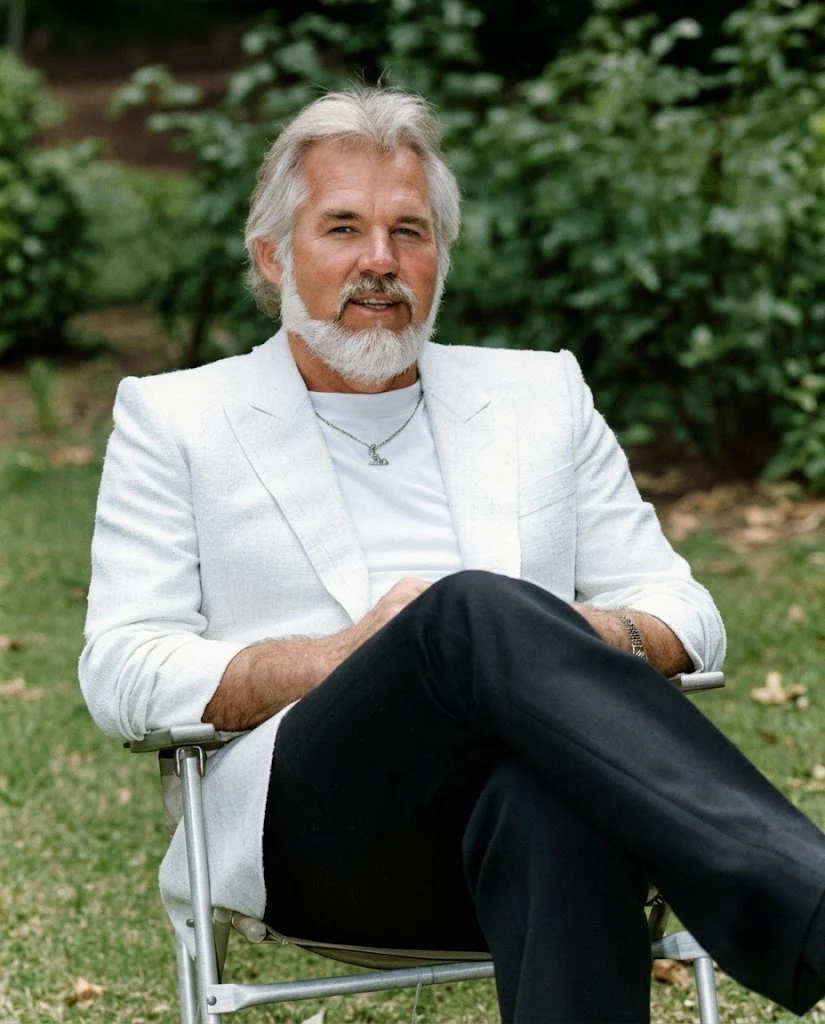
Before the silver beard, the sold-out arenas, and the global fame, there was a boy named Kenneth Ray Rogers, the fourth of eight children in a cramped Houston housing project. San Felipe Courts wasn’t just a place to live—it was a daily battle against poverty, where a family of ten squeezed into a tiny apartment, sharing hand-me-down clothes and the constant worry of where the next meal would come from. But it was precisely this environment that forged one of the most enduring storytellers in American music.
“The voice that comforted the world was born from a boy simply trying to find a little peace in a crowded room.”
The walls of that small apartment were held together by the quiet resilience of his mother, Lucille. She worked grueling hours, cleaning offices in the early mornings and taking shifts at a local hospital just to keep her family afloat. Kenny watched her bring home calloused hands and a steady, unspoken determination. From her, he absorbed an unbreakable work ethic—a drive that would later push him through the grueling demands of a six-decade career.
But the house also carried the unpredictable, heavy weight of his father’s severe alcoholism. Edward Rogers was a skilled carpenter, but his drinking frequently stripped away the family’s stability, keeping the household on a precarious edge. Yet, amidst the tension and financial strain, Edward was also the one who brought music into the living room. He played an amateur fiddle, filling the tight quarters with traditional country and Western melodies. For a young Kenny, those notes offered a temporary, vital escape from the hunger and the arguments.
He watched both parents closely, taking a different kind of inheritance from each. From his father, he gained a harsh, permanent warning about the destructive cost of addiction—a lesson that kept Kenny famously sober throughout his life in the music industry. But he also took his father’s deep love for a melody. Realizing that music could be a way out of the Houston projects, a teenage Kenny managed to scrape together enough to buy his first guitar.
He didn’t just play in his bedroom; he took those borrowed Texas rhythms and actively sought an audience. While attending Jefferson Davis High School, he formed a rockabilly group called The Scholars, marking his first real leap onto a stage. The band gained local traction in Houston, eventually leading to his first solo single, “That Crazy Feeling,” and a surreal early television appearance on American Bandstand in 1958. That early stage experience proved to the boy from San Felipe Courts that his voice could command a room and, more importantly, change his family’s reality.
Those initial local gigs were the first steps on a massive, winding journey. Rogers navigated through jazz groups, the folk-rock era with The First Edition, and finally settled into his permanent identity as a country music patriarch. By the time he recorded “The Gambler” and “Lucille,” he wasn’t just singing lyrics; he was delivering them with the gravelly, lived-in authority of someone who had seen the hard side of life.
His voice possessed a quiet empathy that millions of fans immediately trusted. Because he was the fourth of eight children, he had spent his formative years navigating the space between seeking comfort from his older siblings and offering protection to the younger ones. That ingrained sense of compassion bled directly into his vocal delivery. He sang about broken hearts, desperate choices, and everyday struggles not as an observer, but as someone who intimately knew the people he was singing about.
Even as he sold over 100 million records and accumulated immense wealth, he never fully left behind the lessons of his childhood. He remained fiercely protective of his family and notoriously hard-working, treating his legendary career not as an entitlement, but as a privilege he had to earn every single night.
The sold-out arenas eventually replaced the cramped public housing, and the global applause replaced the sound of a lone, amateur fiddle. But the heart of his music never really changed. The voice that comforted the world was born from a boy simply trying to find a little peace in a crowded room.