
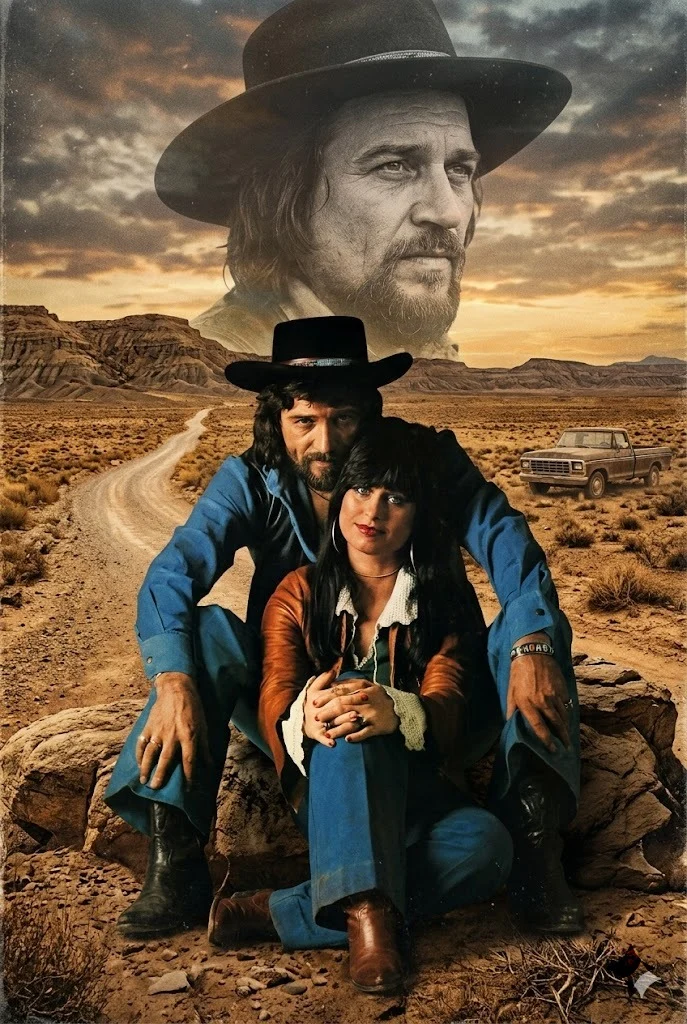
“YOU START MESSING WITH MY MUSIC, I GET MEAN.”
Before the iconic black hat and the legendary outlaw myth, Waylon Jennings was simply a young kid from Texas trying to make his way through smoke-filled rooms with a heavy baritone and a restless spirit. But the Nashville executives of Music Row in the 1960s had an entirely different template in mind, pushing clean-shaven faces, obedient voices, and glittering rhinestone suits.
When an executive slid a flashy suit across a polished mahogany mahogany desk that afternoon, Waylon refused to play the game. He carried the heavy ghost of an empty airplane seat from that freezing February night in Iowa when Buddy Holly perished, a profound grief that kept him from ever selling his soul in a sterile studio.
No shouting, no dramatic exit, just the heavy thud of worn leather boots walking away from a million-dollar promise and out the glass doors.
Labeled stubborn and difficult by an industry that wanted obedience, he kept his beard, grew his hair long, brought in his own road band, and stripped away the echoing corporate sound. By the mid-seventies, his revolutionary hit song “Are You Sure Hank Done It This Way” shattered the mold and gave hungry listeners the raw truth they craved.
Waylon never changed to fit the world, because he forced the world to make room for his truth.