
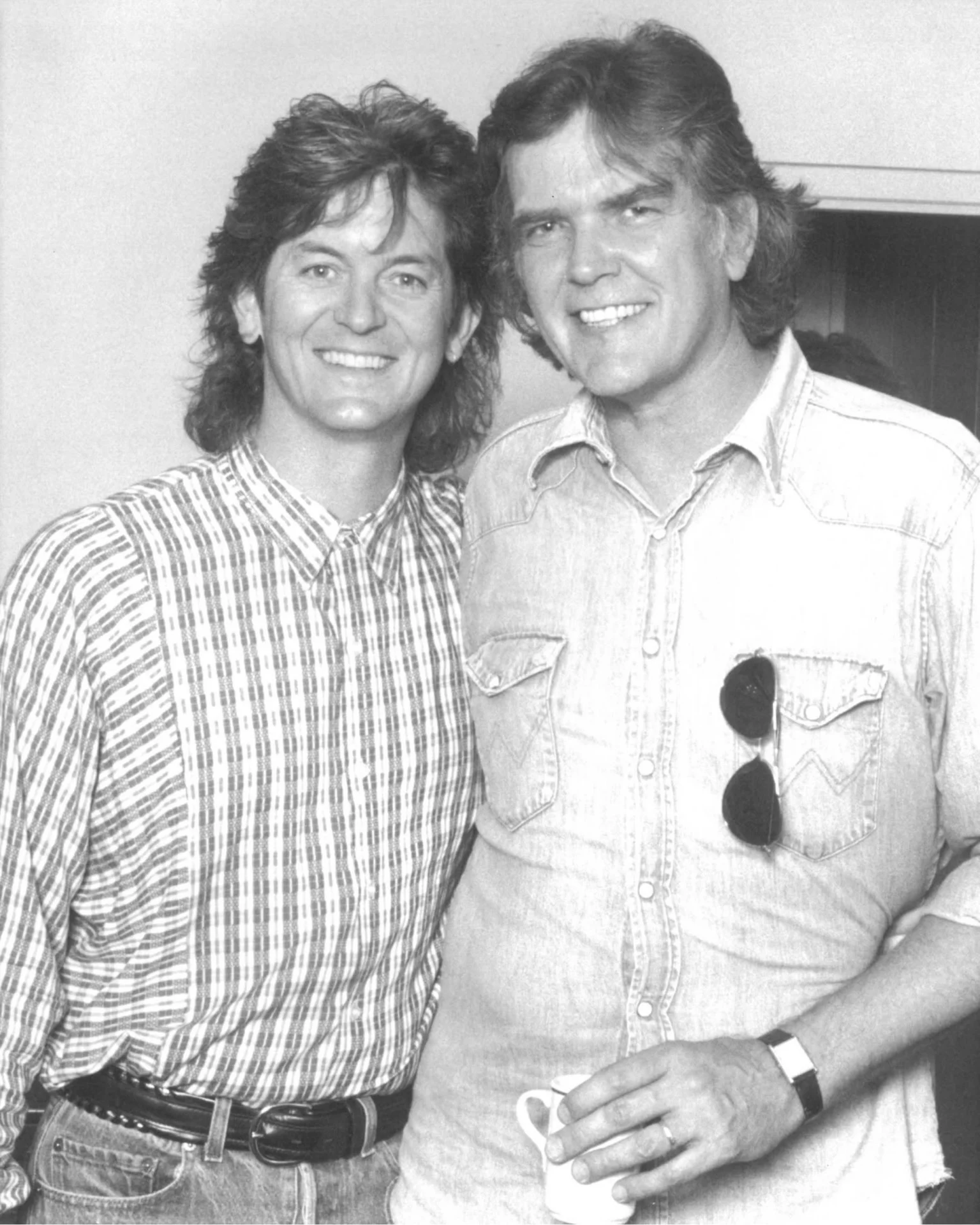
The last seven months of Guy Clark’s life were not spent in silence. Rodney Crowell kept visiting, and each conversation carried the weight of time they would not get back. Crowell knew his friend would not recover, but he stayed at the table, listening and remembering. From those visits emerged a song that needed three voices—one of which belonged to a woman who had been gone for years.
Susanna Clark died in 2012, but her presence never left the home she shared with Guy. She was a painter, a songwriter, and the heart of a gathering place where young writers like Crowell, Townes Van Zandt, and Steve Earle passed guitars and tested songs long before Nashville knew their names. For Crowell, Susanna was more than Guy’s wife. She was an early woman friend who taught him how to listen without pursuing or possessing, and that lesson shaped his understanding of friendship itself.
“It Ain’t Over Yet” took about six months to write. Crowell called it a three-way dialogue, shaped by his closeness to both Clarks.
When Crowell reached the section that carried Susanna’s voice, he heard Rosanne Cash singing it in his mind. He made a recording on his phone and sent it to her. She agreed to take part, and John Paul White joined them, giving the finished performance the three separate voices the writing had called for.
Guy died in May 2016. The recording appeared on Crowell’s album Close Ties the following year. To listeners who recognized Rodney and Rosanne primarily as former spouses, their names together might suggest a song about their own past. But its private geography led elsewhere—back to Guy and Susanna, and to the younger man who had spent so much time in their company.
Crowell could have written about the couple entirely in the past tense. Instead, when Rosanne’s part arrives, the woman being remembered gets a turn to speak. The men no longer have the conversation to themselves.
On Close Ties, another song called “Life Without Susanna” confronted the distance and anger that had entered their relationship. Crowell acknowledged that his judgment had fallen on both of them, calling it an unusually honest expression of love. That admission gives the quieter conversation in “It Ain’t Over Yet” more substance—affection survived alongside things he could no longer discuss with her.
The visits near the end contained no miraculous reversal. Crowell visited regularly, they talked, and he understood what was happening. The friendship had lasted long enough for their positions to change. The younger writer who once wanted Guy to hear his songs was now an established artist facing the loss of the person who had listened so early.
“The song gave him a form spacious enough to hold more than a farewell from one man to another.”
“It Ain’t Over Yet” does not supply a transcript of the visits. Its conversation belongs to a song, assembled from memory and invention by someone who had known the people closely. We cannot claim these were Guy’s last words, or words Susanna actually spoke. But we can hear the roles Crowell chose to preserve—the old friend, the woman with something of her own to say, and himself, still taking part, still listening for the next voice.