
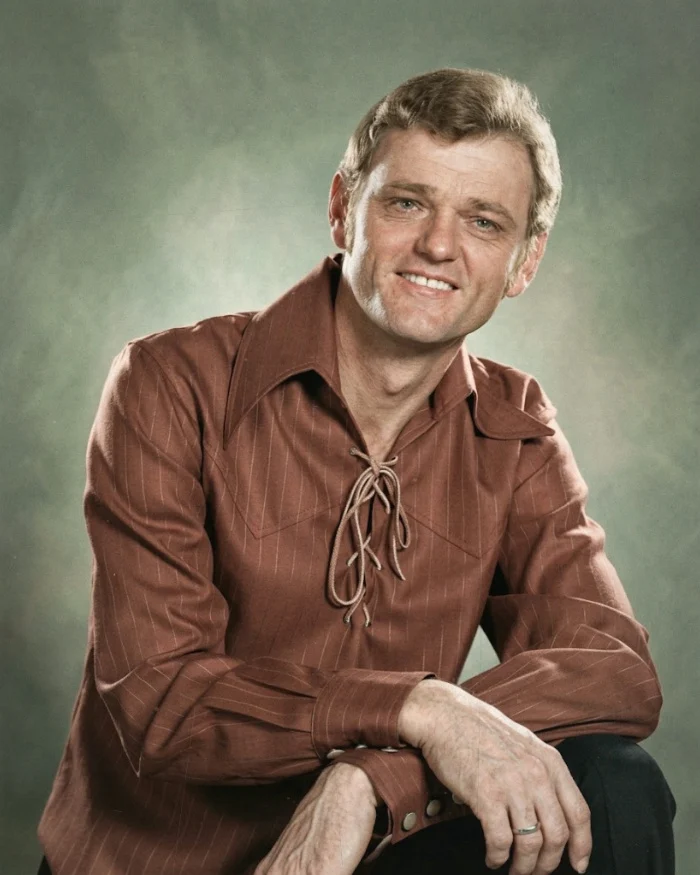
In the late 1950s, Atlanta’s vibrant music scene was a crucible of ambition, where two young dreamers found each other against the odds. Priscilla Mitchell, a seasoned performer since age four, was no stranger to the spotlight. Across town, Jerry Reed—then known as Jerry Hubbard—was a working-class guitarist with fingers so fast they seemed to blur, grinding through local sessions in hopes of being noticed. Their paths collided, and despite their different trails, a shared Georgia heritage and an unquenchable love for music sparked an instant connection.
In modest practice spaces, stripped of commercial polish, something extraordinary happened. Reed’s intricate fingerpicking found an effortless rhythm alongside Mitchell’s soulful voice. Where others saw only a struggling young picker, Mitchell recognized an undeniable spark of genius hidden behind his humble exterior. Her steady confidence became an anchor for Reed during a time when his future in the music industry seemed anything but secure. Their mutual respect quickly deepened into love—a bond defined not by material security or promises of stardom, but by an instinctive trust between two working-class dreamers.
“Their marriage endured for forty-nine years, serving as the steady ground beneath his rise to country music royalty.”
In 1959, while both were still in their early twenties and long before either had secured lasting national fame, the couple made the choice to marry. That leap of faith bound their fortunes together at a moment when neither had any guarantee of making a living in music. That quiet Atlanta partnership proved stronger than the volatile business they chose, becoming the most enduring melody of his life.
When Jerry Reed Hubbard and Priscilla Mitchell packed their belongings and headed northwest toward Tennessee in the early 1960s, their marriage had already survived two years of military service and a string of dead-end recording contracts in Atlanta. They arrived in Nashville with no guarantees, relying on Mitchell’s vocal experience and Reed’s blistering fingerpicking technique to gain a foothold on Music Row.
Nashville producer and guitarist Chet Atkins quickly recognized Reed’s unusual claw-style picking, signing him to RCA Victor and putting him to work as an A-team session player. Yet behind the scenes, Mitchell remained an active creative partner. In 1965, Mitchell scored a major national breakthrough of her own, teaming up with Roy Drusky on the smash duet “Yes, Mr. Peters,” which soared to Number 1 on the Billboard Hot Country Singles chart.
Rather than creating friction between two competitive careers, Mitchell’s chart success provided essential household stability while Reed refined his own solo sound. By the late 1960s, the couple began stepping into Nashville recording studios together. When Reed entered RCA Studio B to track his solo albums, Mitchell was often standing by the vocal microphones, contributing tight, soulful harmony lines on early cuts and backing tracks produced under Atkins’ supervision.
Their formal collaborative recordings captured a shared affection for Southern gospel and upbeat country blues. In the 1970s, as Reed’s career erupted with hits like “Amos Moses” and “When You’re Hot, You’re Hot,” Mitchell joined him on specialty projects. They recorded duets and gospel selections together, blending Mitchell’s smooth, church-trained alto with Reed’s gritty, rhythmic phrasing. On stage, Mitchell occasionally made unannounced appearances at his concerts, stepping up to the microphone without theatrical fanfare to trade playful banter and close vocal harmonies with her husband.
Away from Music Row and the Hollywood movie sets that occupied Reed during his Smokey and the Bandit era, the couple structured their lives around family. They raised two daughters, Charlotte and Seidina, keeping their household grounded on the outskirts of Nashville. Even as Reed became an international comedic and musical icon, neighbors and session veterans knew that Mitchell served as his steady sounding board, evaluating his songs long before they ever reached studio tape.
Later in life, Reed continued to honor that creative bond, collaborating directly with their daughters and ensuring his home remained an open musical workshop. Priscilla stepped back from commercial touring to manage the family’s business interests and personal sanctuary, providing the constant foundation that allowed Reed to balance the demanding life of an entertainer with long-term sobriety and peace of mind.
Their partnership endured for forty-nine continuous years until Reed’s passing in August 2008 at age seventy-one. From their earliest days trading notes in drafty Atlanta practice rooms to gold records cut in Nashville, the foundation never shifted. Long after the studio tape stopped spinning and the crowds went home, Jerry Reed remained anchored to the woman who had believed in his hands before anyone else knew his name.